American Cranberry
· 12 min read

American cranberry (Vaccinium macrocarpon) is a fruit that grows naturally in the United States and Canada.
Indigenous peoples traditionally used the plant for many ailments, and European settlers quickly adopted the practice of using it for its medicinal properties.
Since the start of the 21st century, American cranberry has been the subject of research into its health-supporting properties. The most significant studies concern its effects on the urinary tract, including the bladder. The beneficial effect has been demonstrated and is linked to the special type A proanthocyanidins it contains.
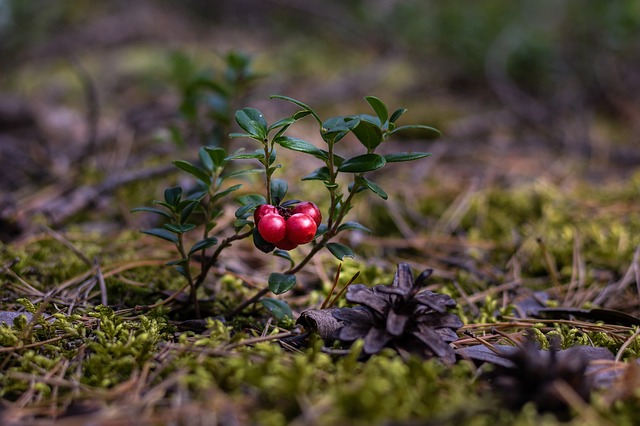
American cranberry as a plant
The English name “cranberry” came from early European settlers, who called it “craneberry”. They noticed that the flower’s pistil resembled the head of the sandhill crane. So “crane” and “berry” combined into “craneberry”, which over time became the modern “cranberry”.
Characteristics of the plant
The cranberry has specific needs: it can only grow and thrive under particular environmental conditions. It needs acidic peat soil (rich in decomposed plant matter) and a constant supply of fresh water and sunlight. The growing season of American cranberry runs from April to November, followed by a cold season during which the buds develop.
Cranberries do not grow in water, as is often assumed. They grow on low vines in bogs, supported by layers of peat, soil, gravel and moss. These beds were originally formed by glacial deposits, but today they can also be made by people.
Cranberry growers do not need to worry that the plant will be exhausted, as the perennial vine can live for an indefinite time. Some plants in Massachusetts are more than 150 years old.
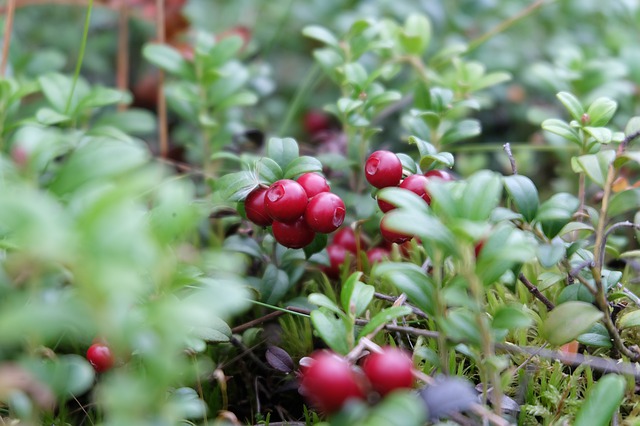
History of use
Cranberries were used for a long time by Indigenous peoples, who discovered the range of their beneficial properties. They used them in various foods, the most popular being “pemmican”: a highly concentrated mix of dried cranberries, dried elk meat and melted fat. They also used cranberries as a remedy to heal arrow wounds, and as a dye for rugs and baskets.
European settlers began to learn how to use cranberries from the Indigenous peoples. In this way cranberries became established as a trade commodity for barter.
American hunters and sailors carried dried cranberries on their journeys to prevent scurvy. In 1816, Captain Henry Hall was the first to successfully cultivate cranberries on a large scale. Today cranberries are offered both fresh and in processed forms.
There are many varieties of cranberry fruit. The white cranberry is an early-harvest berry, picked two to three weeks before it ripens.

American cranberry and European cranberry
There are two main types of cranberry: the American cranberry (Vaccinium macrocarpon) and the European cranberry (V. oxycoccos).
The European cranberry is smaller (0.6–1.2 cm) and about half the size of the American fruit.
The American cranberry is widely cultivated. It grows in north-eastern America and southern Canada, which together account for around 90% of production. The fruit is harvested all year round and exported to other countries.
American cranberry and urinary tract health
Using cranberry to support urinary tract health has a long history, originally based mainly on anecdotal evidence. That is no longer the case. There is now a growing body of scientific research supporting the use of cranberry for maintaining urinary tract health.
Early studies on urinary tract health
Early research started in the 1980s, showing that cranberry juice can reduce the attachment of E. coli bacteria to urinary tract cells (Sobota 1984; Zafriri et al. 1989; Ofek et al. 1991).
In the 1990s, a clinical study by Avorn et al. (1994) in women with long-term illness showed a significant reduction in bacteria in the urine within one month of drinking cranberry juice. Subsequently 15 clinical studies assessed the protective effects of cranberry against urinary tract infections in different populations.
Over the following years, researchers and health professionals came to believe that the effect of cranberry juice was due to acidification of the urine by hippuric acid, produced by metabolism of the cranberry’s quinic acid (Blatherwick 1914; Bodel, Cotran and Kass 1959).
This assumption was never confirmed.
Studies linking the urine pH with cranberry consumption have shown no significant change in urine acidity, or only a slight pH reduction, which is insufficient to make bacteria less active. The effect is therefore more likely to be linked to anti-adhesion (preventing bacteria from attaching) (Howell 2002).
Proanthocyanidins type A
Researchers began to investigate other possible mechanisms of action that lead to the blocking of bacterial anti-adhesion properties (which prevent bacteria from attaching to the urinary tract) (Sobota 1984). Anti-adhesion tests on uropathogenic P-fimbriated E. coli strains, which are responsible for most urinary tract infections, showed that cranberry compounds inhibit adhesion (Ofek et al. 1991).
Biological analysis of cranberry, combined with an explanation of the active compounds, showed that tannins from cranberry block the attachment of E. coli to urinary cells.
The structures of these compounds are determined by their nuclear-magnetic resonance and are classed as A-type proanthocyanidins.
This is the reason that in 2004 AFSSA (the French Agency for Food Safety) approved it as the only fruit that acts against the adhesion of E. coli to the walls of the urinary tract.
The virulence of uropathogenic E. coli bacteria depends on their P-fimbriae adhesins, through which they attach to specific receptors on urinary cells. For this reason, type A proanthocyanidins recognise E. coli without harming it, and they interfere with the binding of bacteria to receptors on the surface of the urinary tract.
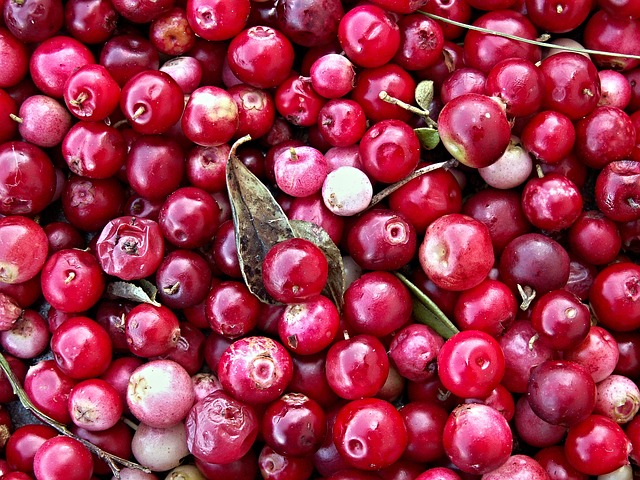
Later studies show the ability of type A proanthocyanidins in cranberry to inhibit the cell adhesion of H. pylori and the development of lymphoma.
CystiRen is a product containing cranberry extract, standardised to a high content of type A proanthocyanidins: /products/cystiren/
Scientific evidence for the benefits of American cranberry
Proanthocyanidins from many other sources, including cocoa, grape seeds, apples, green tea and chocolate, contain type B bonds. The type of bond is likely key to the antiadhesive action of the fruit. For this reason, various sources of proanthocyanidins have been tested: cranberry, apple, grape, green tea and chocolate. The aim was to study their antiadhesive effect against E. coli. The concentration of American cranberry showed a desired effect at the lowest dose (60 μg/mL). Only cranberry had an antiadhesive effect (apart from the cranberry itself), and its effect continued at much higher doses (1200 μg/mL) (Howell et al. 2005). The study clearly showed that cranberry prevents the attachment of the harmful bacterium to the walls of the urinary tract.
A randomised, double-blind, placebo-controlled trial with 20 healthy volunteers was carried out to determine the effect of cranberry on the number of bacteria in the urine. The volunteers received a single dose of cranberry juice (750 or 250 ml, mixed with 500 ml water) or a placebo in the evening. Urine was collected overnight and tested for antiadhesive activity against six bacteria strains that cause urinary tract infections. A significant and dose-dependent reduction in bacterial adhesion was observed in the urine of subjects who consumed cranberry (Di Martino et al. 2006).
In pregnant women, where asymptomatic bacteriuria can cause unfavourable perinatal results if not treated, cranberry juice consumption reduced asymptomatic bacteriuria by up to 57% and reduced urinary tract infections by 41% (Wing et al. 2008).
A randomised, double-blind, placebo-controlled trial in hospitalised patients over 60 years old found that the group consuming cranberry juice daily for 35 days, or until discharge, had almost half the symptoms of urinary tract infections (McMurdo et al. 2005).
A later trial of this group, comparing cranberry with 500 mg of extract against trimethoprim, a low-dose antibiotic, in older women, found that both treatments reduced recurrent urinary tract infections. The cranberry group reported slightly fewer side effects compared with the antibiotic group (McMurdo et al. 2009).
There are other clinical studies that confirm the effectiveness of cranberry in urinary tract infections across different populations, including women with recurrent infections (Walker et al. 1997; Stothers 2002; Bailey et al. 2007), pregnant women (Wing et al. 2008), older people (Avorn et al. 1994; McMurdo et al. 2005; McMurdo et al. 2009) and children (Ferrara et al. 2009).
Recurrent and chronic urinary tract infections
A randomised, double-blind, placebo-controlled trial in women aged 28–44 with recurrent urinary tract infections, using cranberry or placebo for three months, found that 70% of the subjects had fewer urinary tract infections while taking cranberry (Walker et al. 1997).
In a trial of women aged 25–70 with a high risk of recurrent urinary tract infections (six or more episodes in the previous year), a daily intake of 200 mg of concentrated cranberry extract for 12 weeks was found to prevent recurrence in all individuals during the study (Bailey et al. 2007). A follow-up trial two years later found that those who continued taking cranberry remained free of infection.
Precautions for American cranberry before antibiotics
Compared with antibiotics, which act on a wide range of bacteria (non-selectively), type A proanthocyanidins act far more specifically. They only disrupt the link between the pathogenic bacterium and its receptors, without destroying the entire E. coli population, some of which is part of the beneficial microflora of the body. Antibiotics and chemotherapy can destroy other beneficial bacteria, and may also encourage the development of resistant strains.
CystiRen for healthy urinary tract
The product CystiRen contains a specially developed patented extract (with 40% type A proanthocyanidins). To show the specific antiadhesive effect, in line with AFSSA (Agence Francaise de Securite Sanitaire des Aliments – the French Agency for Food Safety), the required daily dose of proanthocyanidins (PACs) is a minimum of 36 mg PACs. The standard daily dose of CystiRen contains 72 mg PACs.
CystiRen also contains an extract of goldenrod, which acts as a potassium-sparing diuretic. The extract works in a complementary way, supporting the body’s natural fluid balance.
The combination of the two extracts helps keep bacteria from adhering to the walls of the bladder and urinary tract, and helps the body eliminate them quickly with the urine.
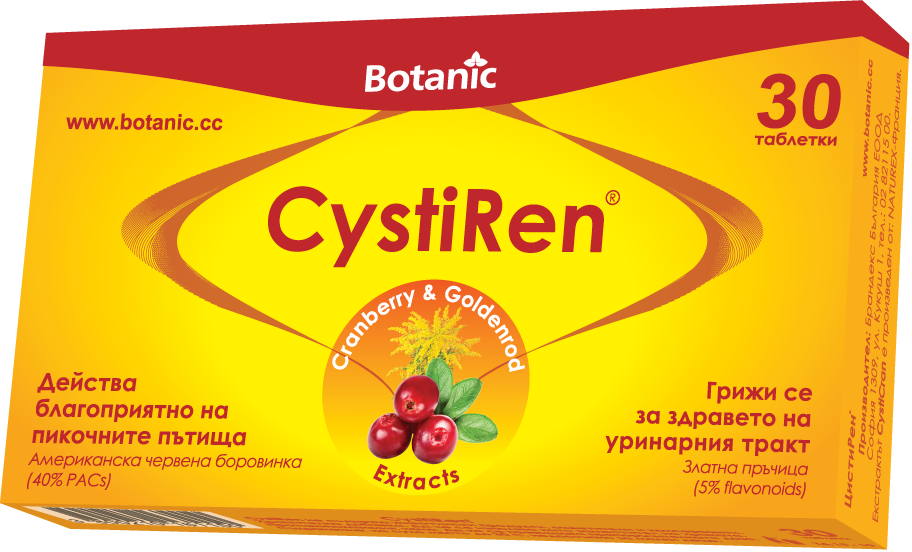
You can learn more about CystiRen!
Conclusion
American cranberry is a plant with a small red fruit, growing on low vines. The plant requires special conditions to thrive. It needs acidic soil, good water-retaining substances, fresh water, a suitable climate zone and more. Indigenous peoples knew the plant and used it both as food and for its medicinal properties. European settlers and sailors soon adopted this knowledge. Cranberry was used as a remedy, and also as a trade commodity for barter.
Today cranberry is best known for its supportive role in urinary tract health. This property depends on the content of type A proanthocyanidins, which bind to the bacteria and interfere with their attachment to the urinary tract. In this way, bacteria are less able to adhere to urinary cells.
Several clinical studies confirm the supportive effect of cranberry, although some of them show certain limitations regarding antibiotic treatment: lack of strong effects, unpredictable action, and safety concerns over resistance.
To get a product with cranberry that works, it is essential that it contains type A proanthocyanidins. CystiRen contains a special extract with 40% PACs A. You can learn more here: /products/cystiren/
References
- Avorn J, Monane M, Gurwitz J.H, Glynn R.J, Choodnovskiy I, Lipsitz L.A. Reduction of bacteriuria and pyuria after ingestion of cranberry juice. J Am Med Assoc. 1994;271:751–4. [PubMed]
- Bailey D.T, Dalton C, Daugherty F.J, Tempesta M.S. Can a concentrated cranberry extract prevent recurrent urinary tract infections in women? A pilot study. Phytomed. 2007;14:237–41. [PubMed]
- Blatherwick N.R. The specific role of foods in relation to the composition of the urine. Arch Intern Med. 1914;14:409–50.
- Bodel P.T, Cotran R, Kass E.H. Cranberry juice and the antibacterial action of hippuric acid. J Lab Clin Med. 1959;54:881–8. [PubMed]
- Di Martino P, Agniel R, David K, Templer C, Gaillard J.L, Denys P, Botto H. Reduction of Escherichia coli adherence to uroepithelial bladder cells after consumption of cranberry juice: A double-blind, randomized placebo-controlled cross-over trial. World J Urol. 2006;24:21–7. [PubMed]
- Ferrara P, Romaniello L, Vitelli O, Gatto A, Serva M, Cataldi L. Cranberry juice for the prevention of recurrent urinary tract infections: A randomized controlled trial in children. Scand J Urol Nephrol. 2009;43:369–372. [PubMed]
- Howell A. Cranberry proanthocyanidins and the maintenance of urinary tract health. Crit Rev Food Sci Nutr. 2002;42S:273–8. [PubMed]
- Howell A.B, Reed J.D, Krueger C.G, Winterbottom R, Cunningham D.G, Leahy M. A-type cran-berry proanthocyanidins and uropathogenic bacterial anti-adhesion activity. Phytochem. 2005;66:2281–91. [PubMed]
- Howell A.B, Vorsa N, Der Marderosian A, Foo L.Y. Inhibition of the adherence of P-fimbriated Escherichia coli to uroepithelial-cell surfaces by proanthocyanidin extracts from cranberries. N Eng J Med. 1998;339:1085–6. [PubMed]
- McMurdo M.E, Argo I, Phillips G, Daly F, Davey P. Cranberry or trimethoprim for the prevention of recurrent urinary tract infections? A randomized controlled trial in older women. J Antimicrob Chemother. 2009;63:389–95. [PMC free article] [PubMed]
- McMurdo M.E.T, Bissett L.Y, Price R.J.G, Phillips G, Crombie I.K. Does ingestion of cranberry juice reduce symptomatic urinary tract infections in older people in hospital? A double-blind, placebo-controlled trial. Age Ageing. 2005;34:256–61. [PubMed]
- Ofek I, Goldhar J, Zafriri D, Lis H, Adar R, Sharon N. Anti-Escherichia adhesion activity of cranberry and blueberry juices. N Eng J Med. 1991;324:1599. [PubMed]
- Sobota A.E. Inhibition of bacterial adherence by cranberry juice: Potential use for the treatment of urinary tract infections. J Urol. 1984;131:1013–6. [PubMed]
- Stothers L. A randomized trial to evaluate effectiveness and cost effectiveness of naturopathic cranberry products as prophylaxis against urinary tract infection in women. Can J Urol. 2002;9:1558–62. [PubMed]
- Walker E.B, Barney D.P, Mickelson J.N, Walton R.J, Mickelson, Jr. R.A. Cranberry concentrate: UTI prophylaxis. J Fam Pract. 1997;45:167–8. [PubMed]
- Wing D.A, Rumney P.J, Preslicka C.W, Chung J.H. Daily cranberry juice for the prevention of asymptomatic bacteriuria in pregnancy: A randomized, controlled pilot study. J Urol. 2008;180:1367–72. [PMC free article] [PubMed]
- Zafriri D, Ofek I, Pocino A.R, Sharon N. Inhibitory activity of cranberry juice on adherence of type 1 and type P-fimbriated Escherichia coli to eucaryotic cells. Antimicrob Agents Chemother. 1989;33:92–8. [PMC free article] [PubMed]
Share the article:
Latest articles

Memory
There are many types of memory, from short-term and sensory memory to associative forms. Here is how we learn, store and recall information.
Amylase
Amylase is an enzyme secreted by the pancreas and the salivary glands. It begins breaking down starch in the mouth, turning complex carbohydrates…
Comments