Psoriasis | Causes, Symptoms, Treatment and Helpful Herbs
· 12 min read

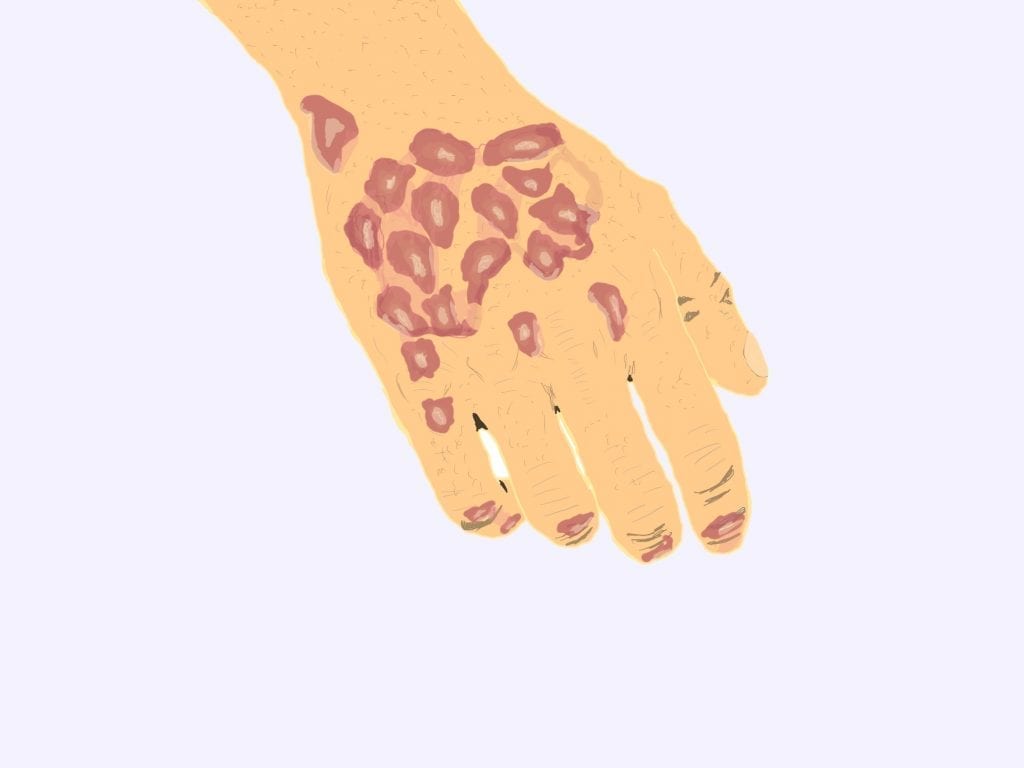
Psoriasis is a long-term (chronic) skin condition in which skin cells multiply up to ten times faster than normal. This causes the skin to build up thick, red patches covered with silvery scales, which can form anywhere on the body. Most often they appear on the scalp, elbows, knees and the lower back.
Psoriasis cannot be passed from person to person, but it is known to run in families.
Psoriasis most often appears in young adults. In the majority of cases the condition is seen only in some parts of the body, but in more serious cases it can cover large areas of the body.
Conventional medicine has not yet found a cure for psoriasis, as the condition tends to come and go in cycles lasting several weeks or months, after which symptoms may fade or enter remission.
It is true that various studies and positions on the causes of the condition and its treatment have emerged over the years, and some have shown significant results.
What causes psoriasis
The exact cause of psoriasis is not clear, but experts agree that it results from a combination of factors. The main theory is that there is a problem with the immune system, which triggers inflammation and causes skin cells to regenerate too quickly.
Under normal conditions, skin cells are replaced every ten to thirty days. In people with psoriasis, this happens every three to four days. The rapid build-up of old cells on the skin surface, which are replaced by new ones before the old ones have been shed, leads to the formation of white or silvery scales.
The exact trigger for psoriasis is not fully understood. Researchers believe that genetics and environmental factors play a role. In some cases, the condition appears much later, and an external trigger has set off the mechanisms of the disease.
Theory on heredity and blood
Some modern researchers believe that the underlying cause of the disease lies in poor digestion. Abnormal conditions in the blood disrupt the intestinal barrier, and small particles, or toxins, pass through the wall into the bloodstream. These toxic substances continue to circulate through the body and eventually end up being processed by the liver. The liver, in turn, passes them on to the body's organs. Such a state becomes chronic, and the overburdened liver is no longer able to cope with processing the toxins, which are released through the skin. This is why the skin is described as a "compensatory organ of the liver". Dr John Pagano and his followers believe that treating psoriasis should begin with treating the liver and improving digestion.
To support digestion, you may trust Enzymill: /products/enzymill/
And for detoxification of the liver and the blood, you may consider DetoxiFive: /products/detoxifive/
Theory on stress
Other researchers believe that psoriasis is the result of strong stress, especially when psycho-emotional development is still unstable, for example through puberty, and when we figuratively and literally build a wall in front of the window of the soul, which must protect us both from external negative influences and from internal hormonal storms. The long-term effect of stress hormones, the immune system disrupts its functioning and the inflammatory processes intensify.
To help relieve stress and reduce its effects, you may rely on the beneficial effect of Bland. Bland is a completely natural product with extracts of matcha, lavender and ashwagandha, which influences the heart rhythm, nerve signals and other factors that moderate the body's response to stress.
Medicines
Some medicines may trigger psoriasis, such as beta-blockers; lithium (used to treat bipolar disorder); and antimalarial drugs.
Your doctor should be informed of the psoriasis so that they can consider whether an alternative therapy may be possible.
Skin injury
In some cases, minor skin injuries such as scratches, cuts and burns can trigger the appearance of patches. Tattoos and piercings from unlicensed studios can also lead to symptoms. Before getting a tattoo or piercing, it is advisable to check the hygiene standards of the studio.
Alcohol
Drinking alcohol, especially in young women, may cause or worsen psoriasis. Combining psoriasis medicines with alcohol may also carry dangerous side effects, especially in people with a liver disorder.
Smoking
Smoking may worsen the condition and increase the risk of complications.
Symptoms
The symptoms of psoriasis vary depending on the type.
Some commonly seen symptoms of plaque psoriasis (the most common type) include:
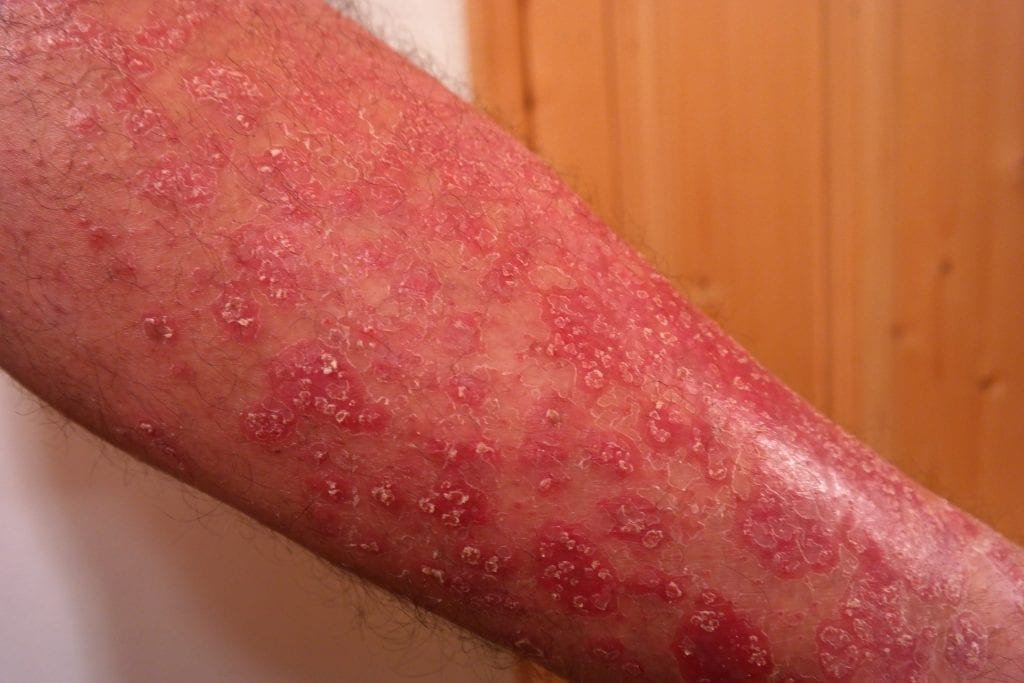
Red patches of skin, covered with silvery-white scales. These patches may be itchy and painful, and sometimes crack and bleed. In severe cases they grow and merge, covering large areas.
Nail changes, such as pitting or loss of colour, and in more serious cases, separation of the nail from the nail bed.
Dry, cracked skin that may bleed or be painful.
White scales on the skin.
Small red bumps that often appear in children.
Pustules and swollen areas. The hands and feet are also affected by a type of arthritis called psoriatic arthritis. The National Psoriasis Foundation estimates that between 10% and 30% of people with psoriasis also have psoriatic arthritis.
You may wish to learn more about the symptoms: /joints-how-to-deal-with-joint-pain/
Psoriasis rashes may vary from a few spots to large formations covering a large part of the body. The most commonly affected areas are the scalp, elbows, knees, lower back, the area around the navel, the face and the hands.
Types of psoriasis
Psoriasis vulgaris
Psoriasis vulgaris (Psoriasis vulgaris), also known as plaque psoriasis, is the most common form of the disease, associated with the red patches and scales that most often appear on the elbows, knees and scalp.
Pustular psoriasis
Pustular psoriasis (psoriasis pustulosa) causes red and inflamed skin with small pus-filled bumps. These may cover large sections of the body, as well as small areas such as the palms of the hands and the soles of the feet.
Guttate psoriasis
Guttate psoriasis (psoriasis guttata), also known as drop-like psoriasis, is a type that appears in childhood or young adulthood, presenting as small red spots, mainly on the trunk and limbs. The causes of this type of disease may include respiratory infections, streptococcal infections in the throat, tonsillitis, stress, skin injury and the use of antimalarial and beta-blocker medicines.
Inverse psoriasis
Inverse psoriasis (psoriasis inversa), also known as flexural psoriasis, causes bright red inflammations that appear in the folds of the skin, such as the armpits, groin and under the breasts. Friction may worsen this condition.
Some bacterial infections may cause this type of psoriasis.
You may wish to learn more about infections: Infections: Types, Causes and Helpful Tips
Erythrodermic psoriasis
Erythrodermic psoriasis (erythrodermia psoriatica) causes widespread reddening of the skin and shedding of scales over the skin. This type is threatening because it can lead to serious complications.
This form of the disease needs prompt treatment, as it can lead to serious complications.
Psoriasis of the nails
Psoriasis can affect the nails on the hands, as well as those on the feet. This can lead to problems with their growth, loss of colour, and in more serious cases, to the nail falling off.
Psoriatic arthritis
Psoriatic arthritis leads to swelling and pain in the joints that are typical of arthritis. Sometimes the joints in the joints are the first and/or only symptoms of psoriasis. The symptoms vary, as each case may be affected by the disease. Psoriatic arthritis can lead to bone and joint damage and, in the most serious cases, the joints may be permanent.
Learn more about the joints: /joints-how-to-deal-with-joint-pain/
You may wish to support your joints with ForFlex: /products/forflex/
Diagnosis
It is best for a specialist to diagnose psoriasis, especially when there are rashes on the scalp, ears, elbows, knees, navel or nails.
The specialist will examine the affected areas and ask whether other members of the family suffer from psoriasis.
Laboratory tests
The specialist may perform a biopsy, taking a small piece of skin and examining it, to make sure the rashes are not caused by an infection. This is the only way to confirm that it is psoriasis.
Treatment
There are medicines that can affect the symptoms, but treatment needs to be comprehensive and include many factors, such as treatment of impaired intestinal permeability, the inflammation in the body, impaired digestion, a detox regime, support for liver function, and stress management.
In allopathic medicine, drug treatments are divided into several types: some slow the growth of new skin cells, while others concentrate on the symptoms such as itching and dry skin.
The specialist may choose a treatment programme that is most suitable for the specific case. It depends on the size of the rash, where it is positioned, the age, the general health and other factors.
Common forms of treatment include: corticosteroid creams; moisturisers for dry skin; coal tar (a common treatment for psoriasis of the scalp, offered in lotions, creams, oils, shampoos and bath solutions); special creams or ointments in concentrated form; retinoid creams.
Treatments for moderate to severe psoriasis
Light therapy
The specialist exposes the skin to ultraviolet light to slow the growth of new skin cells. PUVA is a treatment that combines a medicine called psoralen with a special form of ultraviolet light.
Methotrexate
This medicine may cause diseases of the bone marrow, liver damage, as well as problems with the white blood cells, so it is prescribed only in serious cases. The doctors carefully observe the patients, as they may be assigned check-ups of the organs that are exposed to risk, in order to ensure the therapy passes without serious side effects.
Retinoids
This capsule, creams, ointments, lotions and gels are class medicines, associated with vitamin A.
This medicine is made for pressing the immune system, may be taken in serious cases, which are not affected by other treatments. It may damage the joints and increase the risk of fractures, so the doctor needs to observe the results of the treatment carefully.
Retinoids may cause serious side effects, including birth defects, so they are not recommended for women who are pregnant or plan to have children.
Biological treatments
In this case, this type of medicine acts by blocking parts of the immune system of the body, which is overactive in the case of psoriasis. Biological medicines include: adalimumab (adalimumab), brodalumab (brodalumab) and several others.
Inhibitors of enzymes
The medicine apremilast (apremilast) is a new type of medicine for long-term inflammatory diseases such as psoriasis and psoriatic arthritis. This is a tablet, which blocks a specific enzyme that helps to slow other reactions that lead to inflammation.
Before doctor John Pagano, treatment of psoriasis is meant to include first excluding the intake of toxic substances, such as alcohol, cigarettes and others, physical exercises and above all the sweating - restoration of the intestinal wall and removal of the toxins from the body.
When is professional consultation necessary with a specialist
When the rash spreads or worsens quickly, consult a specialist.
When the patches and discomfort are large
When there are problems with the joints such as pain and swelling that interfere with carrying out everyday tasks
When the treatment does not bring the desired effect or brings side effects.
Risk factors and herbs that support psoriasis
Everyone with psoriasis has individual causes that trigger it. Identifying these causes can help prevent flare-ups and the appearance of rashes.
Psoriasis is a problem linked to the immune system, so the causes may include:
Dry and cold climate
Dry and cold climate may irritate the skin and worsen the condition. On the other hand, a warm climate with high humidity may help.
Stress
Stress weakens the body and disrupts various internal processes, including the immune reaction. Calmness supports the body's function.
To help manage stress, you may rely on the beneficial effect of Bland. Bland is a completely natural product with extracts of matcha, lavender and ashwagandha, which influences the heart rhythm, nerve signals and other factors that moderate the body's response to stress.
Medicines
Your doctor should be informed of the psoriasis so that they can consider whether an alternative therapy may be possible.
Skin injury
Minor skin injuries such as scratches, insect bites and burns may trigger the appearance of patches. Tattoos and piercings from unlicensed studios may also lead to symptoms. In such a case, it is wise to take measures to protect your skin, to avoid the appearance of a rash.
Alcohol
Alcohol consumption, especially in young women, may cause or worsen the condition of psoriasis. Combining psoriasis medicines with alcohol may have dangerous side effects, especially in people with a liver disorder.
Smoking
Active and passive smoking may carry a risk of developing or worsening psoriasis. It is recommended to quit, reduce or avoid it.
Conclusion
Psoriasis is a chronic disease that manifests in a specific skin rash (red areas of skin, covered with scales).
The disease is due to accelerated skin cell production. The accumulation of cells leads to these characteristic skin formations.
There are various factors that trigger psoriasis and its manifestation in a typical rash, such as family history of the disease, skin injuries, infections in the throat and stress.
Psoriasis may vary, as the most common type is psoriasis vulgaris, but there are also other types that manifest in specific symptoms in different areas of the body.
For sufferers, psoriasis also has a predisposition to the development of psoriatic arthritis.
There are different medicines that may affect the rash, as in strong patches, cramps, side effects from the treatment or other abnormal manifestations of the disease, it is advisable for a person to consult with a specialist.
The general recommendations for preventing symptoms are care for the skin, avoidance of alcohol and cigarettes, controlling stress.
You may wish to learn more about the skin: Skin
You may wish to support your skin with ForFlex!
You may wish to deal with stress with Bland. Learn more about Bland!
Share the article:
Latest articles
Memory
There are many types of memory, from short-term and sensory memory to associative forms. Here is how we learn, store and recall information.
Amylase
Amylase is an enzyme secreted by the pancreas and the salivary glands. It begins breaking down starch in the mouth, turning complex carbohydrates…
Comments