Memory
· 14 min read
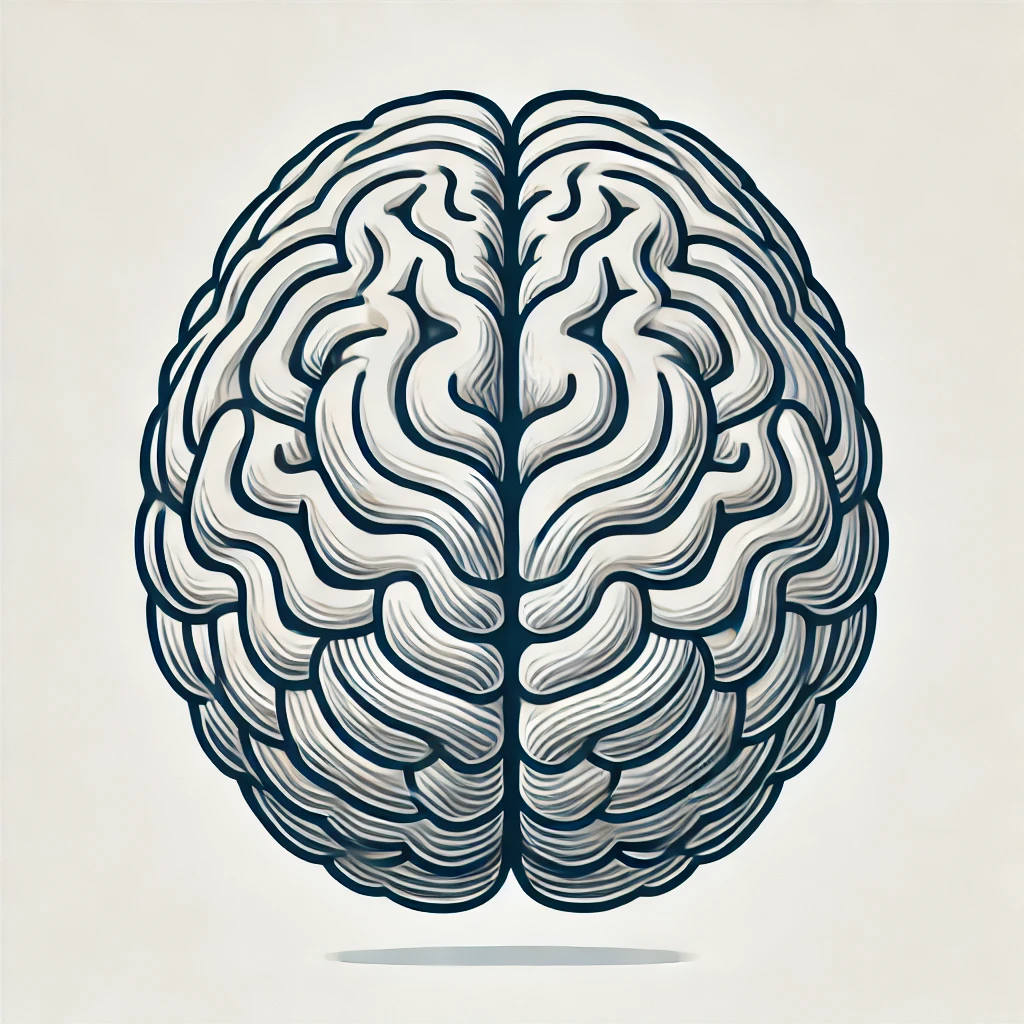
There are many types of memory, from short-term and sensory memory to associative memory, including episodic and semantic memory.
An important concept in the field of memory is that each type of memory has its own operating characteristics and brain pathways.
Different types of memory are intertwined in different processing mechanisms, each with its own neural networks.
Memory is a complex process made up of several stages: encoding, which is the intake of external information into the memory system; storage of the encoded information; and retrieval of that information.
The brain receives information in coded form
When we receive raw information from the environment, the brain labels it with an appropriate category. It organises the information, links it to existing prior information and connects new concepts with old ones.
In this case, under “encoding” there is a fairly automatic process.
For example, if someone asks you what you did yesterday evening, the brain recalls details of the question such as time, place, and the meaning of the thoughts. These processes are most often carried out without great effort. The same would be the case if someone asked you what you ate at dinner.
On the other hand, learning is a difficult process that requires great effort in order to remember new material. What matters for acquiring new skills, such as driving, is that the brain first needs time to encode the new information, like filling up a car, signals at junctions, gas supply and the other rules of driving. Once it has learned all these actions, the brain is free to encode new information at the time of the learned skill.
It is significantly easier for the brain to remember information when it is meaningful and sequential.
There are three ways to encode information.
Semantic encoding
Encoding of thoughts, based on their meaning, is called semantic encoding. This was demonstrated for the first time by William Bousfield through an experiment in which participants had to remember 60 words, divided into 4 categories. The participants did not know the categories existed, as the words were presented in a random order. When they were asked to recall the words, they automatically grouped them. This showed that the brain automatically pays attention to meaning when it learns.
Visual encoding
Visual encoding is remembering pictures, while acoustic encoding is remembering sounds (these examples relate to remembering words).
An example of a visual memory mechanism is an experiment in which various words such as “bee, nostalgia, cola, instinct, costume” are presented. If a person tries to memorise them and recall them, it is much easier to remember the words “bee, cola, costume” if they can visualise them. These words are encoded visually as well as semantically, so they create a stronger trace.
Acoustic encoding
Acoustic encoding is useful for remembering information in children. For example, learning the English alphabet through a song is an effective method. Setting a rhythm and linking thoughts can also be used to remember numbers, and in some languages and cultures for learning the months of the year.
In this way, we remember the meaning of a thought and its phonetic sound, which in turn helps the brain when memorising.
Combining semantic and phonetic memorisation of words and concepts is more effective than either alone. This is because it requires more intensive brain work and therefore builds a stronger connection with the thought.
Storing memory
Once information is encoded, it needs a way to be stored. The brain takes the encoded information and tries to remember it.
To be stored, a memory must pass through three stages: sensory memory, short-term memory and long-term memory.
This model was proposed by Richard Atkinson and Richard Shiffrin, who argued that a person processes information like a computer.
There are other models that challenge the separation of memory, arguing that short-term memory is segmented into visual, audio and other separate parts.
Sensory memory
In the Atkinson-Shiffrin model, information from the external environment is processed first in sensory memory: storage of brief sensory events such as sights, sounds and tastes. This is a very short storage, lasting a few seconds.
We are constantly bombarded with sensory information. Since we cannot remember all of it, and much of it is meaningless to our lives, the brain filters out most of it. If it notices a sensory stimulus that is important, it moves it into short-term memory.
Short-term memory
Short-term memory is a system for temporary storage of sensory information. It is sometimes called working memory. Short-term memory takes information from sensory memory and links it to something from long-term memory. Short-term memory lasts about 20 seconds.
According to George Miller, short-term memory capacity is typically 7 items plus or minus 2 (that is, some 5, and others 9).
Short-term memory is an intermediate stage of processing given information.
This can be compared to a text document on a computer, which needs to be saved or deleted. During this process, it is decided whether the information is important, as well as how much information can be saved, to decide whether a given memory should be stored. If a memory is stored in this form, a given memory can be recalled without problems (for the most part) and it has no time limit for forgetting.
Long-term memory
Long-term memory is the lasting storage of information. Unlike short-term memory, this type of memory has no time limit for forgetting. In principle, the capacity of long-term memory is considered unlimited.
Long-term memory can be stored on a computer as text documents, which we can preserve or delete. Over time, this process shows whether the information is important, and how much information can be kept, in order to decide whether a given memory should be preserved.
Types of long-term memory
Long-term memory is divided into two types: explicit and implicit. The distinction is important, as it relates to a person's age or different types of brain injury that can cause one to be lost while the other remains intact.
Explicit memory is made up of memories that we consciously try to remember, for example learning by heart a particular subject. Explicit memory includes semantic memory (knowledge and concepts) and episodic memory (experienced events).
Implicit memory includes procedural memory (skills) and something learned through emotional connection.
Procedural memory
Procedural memory is a type of implicit memory that remembers actions, for example swimming. At first a person needs to focus time to learn to swim, paying attention to breathing, the movement of their limbs and so on. Once they have learned, they no longer need to think about it, even if they have not swum for years.
Episodic memory
Episodic memory is a type of explicit memory. It is information about events that a person has personally experienced. This concept was first proposed around 40 years ago by Tulving.
The theory has undergone revisions and modifications from its original form. Episodic memory is still considered distinct from other memories because it contains the elements of a given event, such as what happened, where and when, along with the emotions and the sensory details of the event.
Retrieving memories
Retrieving information from memory and bringing it to consciousness is called recall. In connection with the computer analogy, this is equivalent to finding a file and opening it.
Recall has three ways of retrieving information: recognition, identification and learning anew.
To illustrate these types of retrieval with examples, one can use the analogy of a school setting. During an exam with open-ended questions, a person will use recall. The most common type of retrieval is the one we associate with the concept of recall. For multiple-choice test questions, we will compare options A, B, C, D. We see an element that prompts the answer and we recognise it as part of the material. In this model, an element of comparison is involved.
The third type of retrieval of information means learning anew. If the school analogy is used, a person learns a subject in class, but afterwards does not practise it and forgets it. Years later, due to work abroad, they enrol in a Spanish course, and with joy realise that repeated learning is easier than the original.
Is your memory under strain?
There are moments when the mind and memory are especially under pressure, for example during a session, a test, or a job interview.
In such situations, stress takes its toll. It can cause headaches, irritability, impaired memory, high blood pressure and nervous tension. The body responds with a number of physiological changes, including the release of adrenaline, a rise in blood pressure, faster pulse and tensed muscles. This complex of physical changes is called a “fight or flight” reaction and is meant to prepare a person for immediate danger.
Today, in most cases, stress is not due to physical threat, but the body reacts as if it were exactly that. That is why it is not strange that in moments of stress people forget knowledge that under normal circumstances they had reproduced without error.
You may rely on Bland, which contributes to a calm state under stress. Thanks to the extracts of motherwort, lavender and ashwagandha, Bland soothes the body and helps it cope with stress.
Is forgetting normal?
It is entirely normal to forget facts of the kind: where we put the keys, what the medicine for a cold was called, or what the birthday of a certain friend was. Forgetting is a completely natural process.
Researchers at the University of Virginia state that these small gaps in memory are in no way linked to cognitive abilities and are not a reason for worry. If we forget where we put the keys, it is not alarming. It becomes worrying when we forget whether we have keys at all. Then it is good to seek medical help.
Prevention of old age
Memory is an ability that all of us take for granted, and we rarely think about it until the moment we lose it. Lapses in memory are unpleasant in themselves, but worse is the anxiety they bring. The greatest fear may be that of Alzheimer's disease, a progressive illness that most often begins in middle age. It manifests first through small memory defects and changes in behaviour. Much as this decline is common in older people, it is important to understand that most memory lapses have nothing in common with Alzheimer's, nor with the so-called “old-age dementia”. Forgetting some things is natural at any age.

Either way, memory begins to weaken as early as the 20s. It is believed that every decade it weakens by about 2%.
GinkoVin + Centella supports blood circulation significantly, including memory and the ability to learn.
Causes of memory problems
One of the reasons many people suffer from memory loss is insufficient intake of the nutrients the brain needs, especially vitamin B group, magnesium, omega 3 fatty acids, phospholipids and some amino acids. Another cause is impaired blood flow to the brain. The organ depends on blood. It stores oxygen and nourishes every cell in the body. If blood circulation is impaired for any reason, the brain receives less oxygen and nutrients, which affects the functioning of the neural network.
You may wish to support your circulation with:
GinkoVin: /products/ginkovin/
Another factor affecting the decline of memory is free radicals. One of the most common is oxidation which, if not corrected, may significantly damage memory.
Alcoholics and those addicted to narcotics often suffer from memory loss. Allergies, candidiasis, stress, thyroid disorders and poor brain circulation may also take their toll. Hypoglycaemia (low blood sugar level) can also play a role in memory lapses, as for normal function the brain needs a defined level of glucose in the blood.
Tips for improving memory
Exercises for the package
220 volunteers aged 60 to 90 took part in an experiment linked to memory preservation and brain activity. The group was divided into two. In the first, for several months, participants were trained for 15 hours a week to learn something new, which included working on their memory and long-term memory. Members of the second group pursued their ordinary activities. At the end of the study, researchers found that the first group showed significant improvement in memory and cognitive abilities.
Teachers say there are different ways in which we can “train” our memory and keep it in good shape: solving logical tasks, crosswords, performing various activities, learning new languages and many others. One of the best methods for training the brain is reading. It develops memory and imagination. Over time, reading creates a network of associative links in the brain that continuously develop its activity. In this way the speed and flexibility of thinking, which will likely serve you until the end of life, are maintained.
Unlike reading, watching a film, for example, gives an image that is received ready-made and does not make the brain work alone.
Daily effort to acquire new knowledge and skills is good for memory.
Natural remedies
Herbal healers have long been associated with the condition Ginkgo biloba, while modern studies have not conclusively proven that the herb is effective for improving brain performance and circulation. It has been studied for its potential to support attention, memory and cognitive functions, including working memory, abstract memory and processing speed.
One of the key functions of Ginkgo biloba is supporting the flexibility of the blood vessels and the transport of oxygen and nutrients to the cells of active organs (brain, heart, retina and others). It also helps support the brain's normal function and proper blood flow, which keeps the mind alert.
One of the most successful combinations of Ginkgo biloba is the one with the extract of grape seed. The proanthocyanidins in grape seed are believed to support the body against free radicals and strengthen the walls of blood vessels. They are among the most powerful natural antioxidants, reportedly up to 20 times stronger than vitamin C. The extracts complement each other, which supports their combined effect for strengthening blood vessels, high blood circulation and students' concentration, as well as supporting memory and concentration.
GinkoVin + Centella contains a pharmacological extract of ginkgo biloba in combination with high-quality extracts of grape seed and centella.
Before the Columbia University study, flavonoids were shown to help avoid memory loss and stimulate blood circulation.
As a strong antioxidant, catechins in green tea help fight free radicals. Flavonoids increase the stability of capillaries, stimulate heart activity, have diuretic, anti-inflammatory and antibacterial effects. Additionally, these useful substances affect the balance of water and calcium in the body, which are important elements for the correct function of the brain.
You may also strengthen antioxidants through the powerful antioxidant formula in DiabeFor Protect.
Conclusion
Memory is a complex process, on which the ability to carry out daily tasks and to understand the world around us depends.
There are different types of memory, each with its own specific features for memorising, recalling and the corresponding centres of the brain and neural connections that make these processes possible.
The process of memorising includes encoding a given memory, receiving it from the environment, keeping it in short-term, and later in long-term memory.
A person is exposed to every kind of stimulus from the environment, while recording only a very small part of them in their sensory memory (it is an exceptionally brief one). If some sensory stimulus seems important, it remains in short-term memory.
In short-term memory the information is kept for a longer time, where the brain decides whether to store this stimulus in long-term memory. When stored in this type of memory, a given stimulus can be recalled without problems (in most cases) and has no time limit for forgetting.
Beyond these basic divisions of memory, there are more detailed ones such as semantic, episodic, procedural and so on. Each type of memory has a specific function, such as remembering a meaning, other experiences, or the carrying out of mechanical actions. Different parts support the storage and repetition of different processes and functions that allow the normal functioning of a person.
Memories can be formed in different ways, as there is creation of visual, phonetic, semantic connections and so on. Each of these methods has a different strength for creating memory.
Stressful situations, ageing, harmful habits and other dangerous influences for the body can disrupt a person's ability to form and recall memories.
To keep your memory sharp, it is advisable to keep to a healthy lifestyle, including movement and proper storage, as well as to keep your mind engaged with learning new information and solving problems.
Useful products
For good memory and circulation, you may rely on GinkgoVin!
For supporting memory and the ability to receive and learn, you may rely on GinkgoVin + Centella!

For slowing down ageing processes through strong antioxidant protection, you may rely on DiabeFor Protect!
Share the article:
Latest articles

Amylase
Amylase is an enzyme secreted by the pancreas and the salivary glands. It begins breaking down starch in the mouth, turning complex carbohydrates…
What Are Extracts?
Discover what herbal extracts are, how they are made, and why their concentrated form is valued in herbal products.
Comments