Can Cystitis Be Linked to Emotional State?
· 5 min read

Our body is a complete unity between biochemical structures and functional processes. Our thoughts and feelings, our behaviour and our reactions to external factors are in constant dependence on our biochemical determinants and at the same time influence the course of the symptoms. It is therefore absurd and unthinkable to view the body as an isolated collection of organs and systems. To “treat” a single organ only physically, without addressing the possible emotional causes of the symptoms, is a limited approach, as it separates the person into body, emotions, feelings and thoughts. The body is never simply ill or healthy, because it is only the carrier of information sent by consciousness. The body does not do anything on its own. Body and psyche are not separate entities; they are manifestations of one and the same essence. And the harmonious connection between them supports our health.
The connection between symptoms and emotions
Have you ever wondered, when a certain symptom appears, whether it is related to your worries or to some other emotions or feelings, such as anger, suppressed thoughts and suppressed reactions? Is it possible that you feel a huge pressure on your bladder when an emotional problem remains unresolved?
All of these are regularities that we may or may not seek out, they exist regardless, and refusing to acknowledge them is a denial of our own health. Psychosomatics deals with these regularities. The term comes from Greek and means “the influence of the soul and mind (psyche) on the body (soma)”. Even in ancient times it was believed that there is a deep connection between mind and body. Aristotle, for example, observed how emotions such as anger, fear, courage, happiness and joy affect the body.
Psychosomatic medicine examines how social, psychological and behavioural factors interact with physiological processes, and how this affects quality of life.

The psychological basis of cystitis
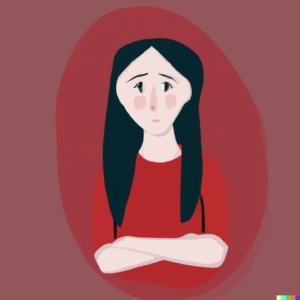
Cystitis, for example, very often has a psychological basis. According to one psychological study, one reason for its occurrence may be the accumulation of tension in one’s personal space.
If we think of cystitis as a typical character, it represents the accumulation of pathogenic organisms in the bladder. And if we imagine that the role of the bacteria is played by something external, unwanted and hostile to us, then the symptoms may be entirely consistent. Italian scientists claim that this problem may arise, for example, in women whose lives are characterised by long-term pressure or a hostile environment (a domineering partner, a demanding boss, problem children, demanding parents). According to a short study, nearly half of gynaecological disorders are reported to result from unresolved emotional problems.
On the other hand, the bladder works through the pressure of holding back urine. And is the inability to express it, as with cystitis, not an inability to free oneself from something that needs to be expelled? The bladder is the collecting reservoir into which all water-soluble waste substances, all substances separated from the blood in the form of urine, wait until they can be expelled from the body. The pressure created by the volume of urine eventually forces it to be sent out, which inevitably leads to great discomfort.

Stress
According to Rudiger Dahlke and Torvald Dethlefsen, two of the pioneers in psychosomatics, problems with the bladder always go back to moments when a person is under psychological pressure, such as an exam or similar circumstances that may have been linked to fear or stress.
Chronic psychological tension is released downwards into the bladder, where it continues as physical pressure. And the pressure, for its part, always asks us to release it. If this is psychologically impossible, that is, if we fail to free ourselves mentally from that pressure, then it tries to let it out physically through the bladder.
Depending on the intensity of the pressure from this problem or situation, the pressure can become exceptionally painful. When the bladder is irritated, the pain when urinating clearly shows how difficult the release is for the person. The very moment of urination, when nothing is released at all, expresses an absolute inability to push out, including “the baby”, the pressure. In all these symptoms it should be noted that the things, matters, problems and situations from which a person should free themselves are only tangible things, a burden, something intangible, something unnecessary.
Analysis
Rudiger Dahlke suggests that when we have frequent repeat cystitis, it is worth asking ourselves the following questions, which can help us free ourselves from both accumulated tension and external pressure, as well as from the symptoms themselves:
- In which areas do I keep giving in, even though they upset me and I would like them to be separated and expelled?
- Where do I put myself under pressure and project it onto others (an exam, a boss)?
- From which unfinished matters would I like to free myself?
- What do I still need to cry about?
The psychological side of cystitis, like that of any other symptom, asks us to change our attitude towards the influence of our own behaviour on our state of health. When we accept this attitude and understand that our reaction to the external world shapes the balance of our internal physiological processes, we free ourselves and choose to be healthy.
Let us remember that we can always trust nature and the gifts it so generously gives us. We can skilfully combine a self-analysis of the emotional causes of a symptom with the support of natural products.
CystiRen
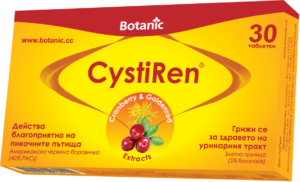
CystiRen is a natural product that helps support the urinary tract and contributes to its normal comfort and function. The product CystiRen contains a combination of American cranberry and goldenrod. The patented cranberry extract is high in proanthocyanidins, type A. The standard daily dose contains 72 mg of proanthocyanidins, which provides a fast-acting effect. The goldenrod extract supports the elimination of microorganisms and waste substances from the urinary tract and the bladder. It helps strengthen the body’s natural defences in the urinary tract. The product contains no animal products, colourings or preservatives. It is completely harmless. You can find it in health stores without a prescription, or order it online at botaniclife.eu.
Literature used
- Illness as a Path, Rudiger Dahlke, Torvald Dethlefsen, Siela
Share the article:
Latest articles
Memory
There are many types of memory, from short-term and sensory memory to associative forms. Here is how we learn, store and recall information.
Amylase
Amylase is an enzyme secreted by the pancreas and the salivary glands. It begins breaking down starch in the mouth, turning complex carbohydrates…
Comments