Dementia
· 7 min read

Dementia
- a syndrome characterised by a decline in cognitive functions to a greater extent than normal ageing. It is a progressive condition that affects memory, thinking, orientation, the ability to learn and calculate, speech and judgement. Dementia is not a specific disease but a group of symptoms that can be caused by various diseases and conditions. The most common form of dementia is Alzheimer's disease, which accounts for 60-70% of all cases. Dementia is one of the leading causes of disability among older people worldwide, as they come to depend on others. In less common cases, dementia can also affect people under the age of 65.

As we age, it is common to have some memory problems, but this is not always a sign of dementia. There are more than 200 different forms and causes of the condition, each with its own specific characteristics and progression. Some may cause noticeable changes in personality and behaviour, while others mainly affect memory. Certain steps can help support brain health alongside a healthy lifestyle, such as regular physical activity and mental stimulation.
Symptoms of dementia
In most medical institutions, dementia develops gradually and symptoms appear at different stages. Sometimes in some cases the early signs may be subtle and merge with normal ageing. This is why they are often not noticed in time. In other cases, symptoms can appear suddenly, especially after a stroke. When the condition progresses, it can cause serious problems with everyday life.
Different types may lead to different combinations of symptoms, such as changes in mood, behaviour and social skills. The severity and expression of dementia vary greatly from person to person.
Early symptoms
The most common early symptoms include problems with short-term memory, especially forgetting recent events. These difficulties may also include losing track of belongings, forgetting names of people you know, trouble finding the right words or repeating questions. Other early signs are disorientation in time and space, difficulties with planning and organising, problems with concentration and judgement. Some people may begin to struggle with familiar tasks such as cooking or managing expenses.
Moderate symptoms
In moderate stages, symptoms become more noticeable and gradually affect daily life. Memory problems become more pronounced, both short-term and long-term. People may find it hard to recognise important information, may not recognise close people or may get lost in familiar places. Difficulties with speech and communication appear, along with problems with reading and writing. Changes in mood and personality may occur, including depression, anxiety, irritability or apathy.
Severe symptoms
In advanced stages, people often lose the ability to communicate on their own and become increasingly dependent on others. They lose basic skills such as speaking, moving and controlling their bladder and bowels. Problems with swallowing and eating may appear, along with a higher risk of infections. At this stage, constant care and close monitoring are needed.
Behavioural symptoms
Often, alongside memory problems, dementia is accompanied by behavioural and psychiatric symptoms such as:
- Aggression and irritability
- Depression and anxiety
- Hallucinations
- Sleep disturbances
- Wandering and restlessness
- Social withdrawal
Risk factors
There are risk factors that may increase the likelihood of developing dementia.
Age
Age is the greatest risk factor for dementia. The risk roughly doubles every five years after the age of 65.
Genetic factors
Family history of dementia increases the risk. Some genetic mutations, such as those in the APP, PSEN1 and PSEN2 genes, cause an early-onset form of Alzheimer's disease.
Cardiovascular risk factors
High blood pressure, diabetes, high cholesterol, smoking and obesity increase the risk of vascular dementia and Alzheimer's disease.
Lifestyle
A lack of mental activity (education, learning, acquiring new skills), lack of physical activity, social isolation and an unhealthy diet are associated with a higher risk.
Other conditions
Depression, head injuries, Parkinson's disease and other neurological conditions may also increase the risk.
Diagnosing dementia
If you notice symptoms of dementia, your doctor may carry out a detailed assessment, which includes several stages. Confirmation may also require additional tests. The diagnostic process includes a detailed medical history, a physical and neurological examination, cognitive tests and various laboratory studies. Cognitive tests such as the Mini-Mental State Examination (MMSE) or the Montreal Cognitive Assessment (MoCA) assess different aspects of brain function, including memory, attention, language and visuospatial abilities. Blood tests check for vitamin deficiencies, hormonal imbalances or other conditions that can cause symptoms similar to dementia.
Imaging studies such as computed tomography (CT) or magnetic resonance imaging (MRI) can show structural changes in the brain. Positron emission tomography (PET) can visualise the metabolic activity of the brain and the presence of abnormal proteins.
In some cases, a lumbar puncture may be used to examine cerebrospinal fluid for dementia biomarkers.
There is no single test that can definitively diagnose dementia. The diagnosis is based on a combination of clinical data and various investigations. In some situations, monitoring of symptoms over time may be needed to confirm the diagnosis.
Treatment
Different types of dementia have different approaches to treatment. There is no treatment that stops the condition completely, but there are practices that can slow its progress and improve symptoms.
Medical treatment
In Alzheimer's disease, several types of medication are used:
- Cholinesterase inhibitors - include donepezil, rivastigmine and galantamine. These medicines increase the level of acetylcholine in the brain and may help improve cognitive functions.
- Memantine - blocks excessive glutamate activity and is used in moderate to severe dementia.
- New medicines - aducanumab and lecanemab are new drugs approved for treating early Alzheimer's disease that target abnormal protein deposits.
Treatment of behavioural symptoms
To manage behavioural symptoms, the following may be used:
- Antidepressants for depression and anxiety
- Antipsychotics for hallucinations and aggression (with attention to side effects)
- Medicines for sleep disturbances
Alternative approaches
Cognitive training, physical activity and music therapy may help improve quality of life. Creating a structured and familiar environment helps reduce confusion.
It is important to emphasise that while symptoms can often be managed, the main brain changes in most forms of dementia are irreversible and the disease continues to progress.
Prevention
There are steps you can take to help reduce the risk of developing dementia:
Physical activity
Regular exercise supports blood flow to the brain and may reduce the risk of dementia by up to 30%.
Mental activity
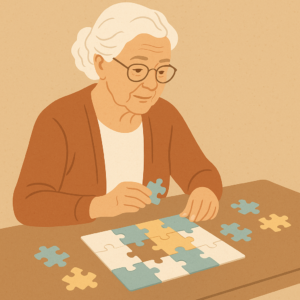
Reading, solving puzzles, learning new skills and social interaction help keep the brain active.
Healthy eating
A Mediterranean-style diet, rich in fish, vegetables and healthy fats, is linked to a lower risk of dementia.
Monitoring cardiovascular risk factors
Controlling high blood pressure, diabetes and cholesterol is of critical importance.
Social connections
Maintaining strong social ties and avoiding isolation help protect the brain.
Good sleep
Sufficient, good-quality sleep is important for brain function and the clearance of toxic proteins.
Avoiding smoking and limiting alcohol
Smoking and excessive alcohol consumption increase the risk of dementia.
GinkgoVin
GinkgoVin contains extracts of ginkgo biloba leaves and grape seeds, which support memory, concentration and circulation.
Cognitive function: supports brain circulation, helps protect against oxidative stress and supports nerve cells against stress.
Cardiovascular system: supports normal blood circulation and healthy blood vessels.
Antioxidant protection: proanthocyanidins from grape seed help protect blood vessels and brain cells.

Find out more about GinkgoVin!
Conclusion
Dementia is a complex syndrome that affects millions of people and their families. It is characterised by a progressive decline in cognitive functions and significantly reduces quality of life. It is not a normal part of ageing but the result of diseases affecting the brain. The most common form is Alzheimer's disease, but there are other types with different aetiology.
Early symptoms include problems with short-term memory, disorientation and difficulties with everyday tasks, which progress to serious cognitive and functional impairment. Diagnosis is made through medical history, cognitive tests and imaging diagnostics.
Treatment is not final, but it can slow progression and relieve symptoms. Approaches such as cognitive stimulation and physical activity are also valuable. For optimal results, a comprehensive approach is recommended. Prevention includes a healthy lifestyle, activity, proper sleep and control of cardiovascular risks.
GinkgoVin - for good memory and circulation!
Share the article:
Latest articles
Memory
There are many types of memory, from short-term and sensory memory to associative forms. Here is how we learn, store and recall information.
Amylase
Amylase is an enzyme secreted by the pancreas and the salivary glands. It begins breaking down starch in the mouth, turning complex carbohydrates…
Comments