Joints: How to Deal with Joint Pain
· 7 min read

Joints
“Joint” is the term for the place where two or more bones meet. Joints come in different types. Depending on their structure, they are classified by whether the bones are connected by strong fibrous connective tissue or cartilage, and by whether they allow free movement.
Joints have several functions. Some are rigid and serve to protect internal organs or provide stability to the body. Others are more mobile and allow movements such as bending of the knees.
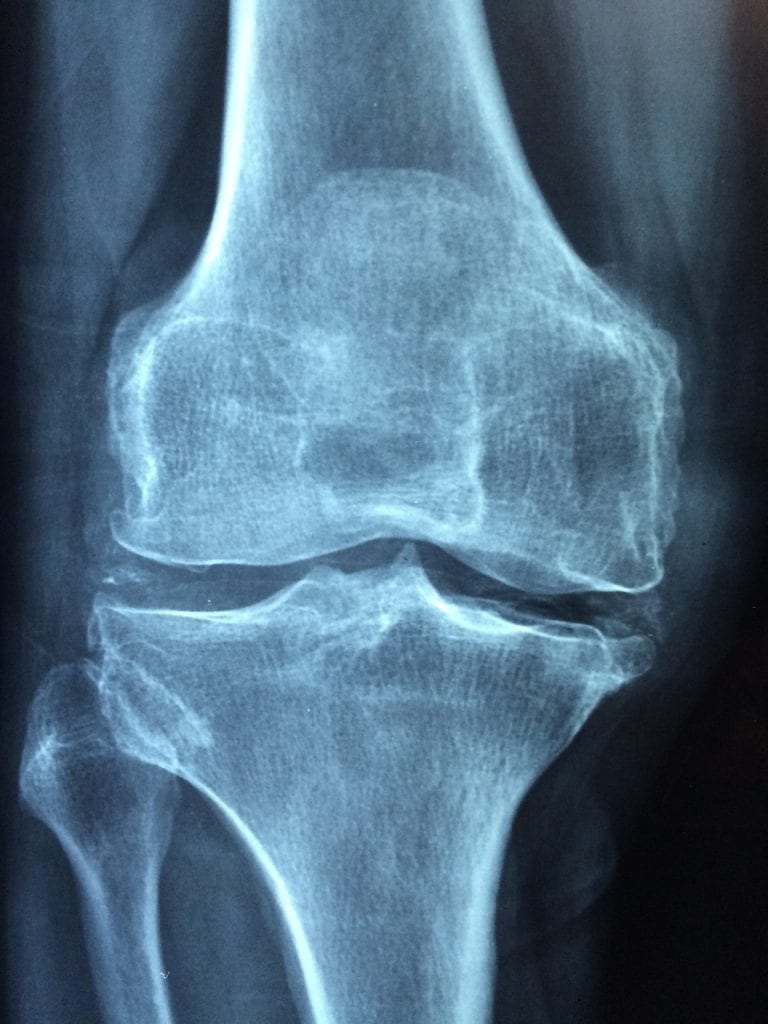
Proteins
Joints, like other parts of the body, contain many proteins. Proteins are long chains of amino acids, and they form the building blocks of cartilage, tendons and ligaments. When joints move, these tissues wear down and need to be replaced by new ones. If the body does not produce enough collagen, which often happens after the age of 40, the production of proteins slows down.
Problems with joints
Joint problems are common today. They are linked to arthritis, injuries and wear. Pain in the joints and stiffness in the body often affect young people as well. According to statistics, problems in the musculoskeletal system affect more than 30% of the population. One of the most common complaints is joint pain. Joint disorders increase with age. This is due to the reduction of glucosamine and its lower absorption.

If problems are not addressed in time, the pain becomes a daily challenge. This is because the joints are gradually wearing down. These processes are accompanied by inflammation, which further irritates the joints and increases the pain. Over time this also disrupts the structural specificity of the joints themselves, for example the presence of fluid. These processes lead to swelling and begin to restrict movement in the joints and muscles.
Problems with joints are not only found in older people. Often the joints are affected by sport, physical strain or injury. Lack of movement and an inactive lifestyle can also contribute to joint problems, because the joints and muscles need regular activity to stay healthy.
Joint problems often coexist with the way we live. Stress, poor sleep and an unbalanced diet can also contribute to inflammation and reduce the body's ability to repair its tissues.
Correct care
In the case of minor problems, the most important thing is to take care of what goes into the body. Doctors often recommend pain relievers and anti-inflammatory medicines to relieve symptoms, but these can have a range of side effects. Therefore, it is worth looking into gentler methods as well.
Glucosamine
Glucosamine is one of the most widely studied substances for joint health. It is a natural component of cartilage and supports the structure of the joint. Research suggests that glucosamine can help maintain joint comfort and mobility, especially in people with age-related wear. Glucosamine is taken regularly over time, and it is not used for quick relief.
Glucosamine is one of the most efficient storage supplements for the preservation and maintenance of cartilage. It stimulates the rebuilding of joint cartilage and helps protect it from breakdown. In the USA, a study was carried out by 13 prestigious universities. 1,500 participants with arthritis and similar conditions took part. For 24 weeks, volunteers were given 1,500 mg of glucosamine daily. The results were more than good, as all participants showed an improvement in their condition.
Glucosamine was long obtained only from the shells of crustaceans. This is why it is unsuitable for use by people who are allergic to seafood, vegetarians and vegans. American scientists have created glucosamine from a new source, derived from the grain of plants. Plant-based glucosamine is preferred in countries such as the USA and England, and more recently it has become popular across Europe.
The main reason is the widespread shellfish allergy and the desire to avoid marine foods. Some specialists argue that plant glucosamine is much better absorbed by the body, and therefore they recommend it.
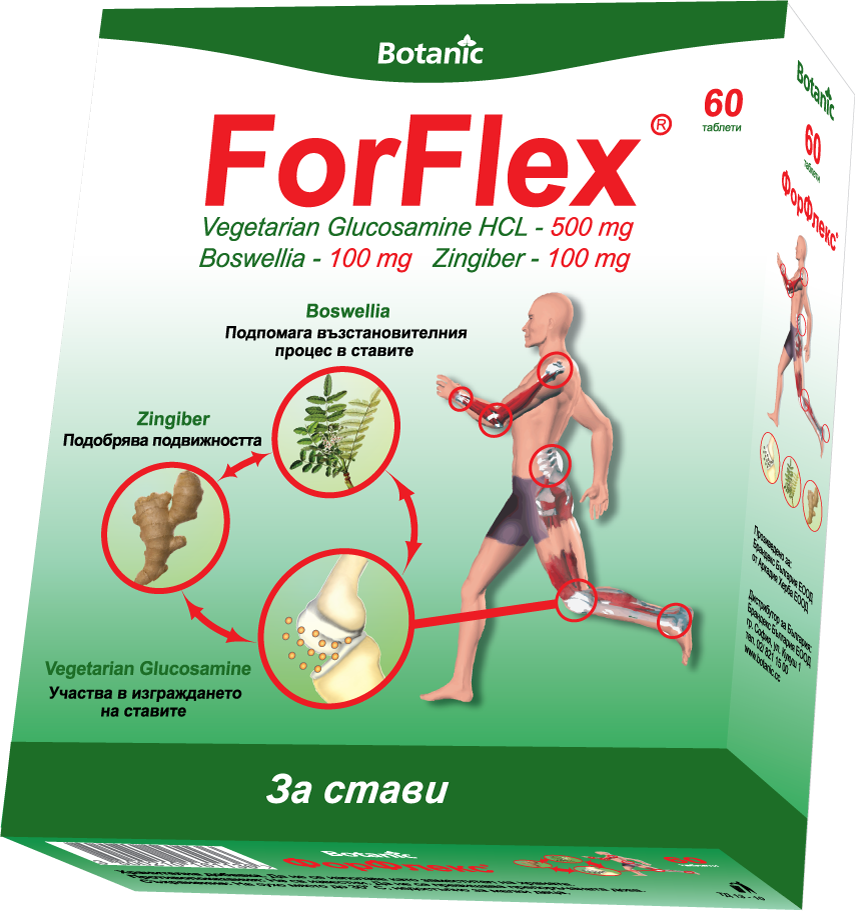
Here is the form of glucosamine in ForFlex: /products/forflex/
ForFlex - for healthy joints
Botanic has created a special formula for joint health, ForFlex, a natural product that covers the whole range of joint needs. ForFlex contains plant-based glucosamine, collagen from fish and collagen from ginger, to help maintain cartilage, joints and more; to support the reduction of inflammatory processes that cause pain; and to support mobility.
ForFlex - for healthy joints!
Plant glucosamine
Directly or indirectly, glucosamine takes part in the formation of joint surfaces, connective tissue and synovial fluid. If it is not obtained in sufficient amounts, which often happens after the age of 40, the joints can become one of the main causes of degenerative joint disease. To be as close to nature as possible, the glucosamine in ForFlex is HCL (glucosamine hydrochloride), the most concentrated and most easily absorbed form by the body. This preserves its molecular integrity in the formula.
ForFlex contains plant glucosamine, which makes it a suitable choice for people who avoid shellfish, vegetarians and vegans, and those allergic to seafood.
Ginger
Ginger is not only a popular spice. It is used as a natural remedy for many conditions, as it is a naturally anti-inflammatory ingredient. Laboratory studies suggest that ginger can help support joints under stress. Ginger can also help soothe discomfort and support general well-being in daily life. It can be taken for a long time without risk of the unwanted side effects of non-steroidal anti-inflammatory drugs.
Boswellia
Boswellia (Boswellia serrata) is a tree that grows in the dry plateau regions of India, North Africa and the Middle East.
The extract used in ForFlex is made from the resin of the tree, and the substance retains its exceptional qualities. Boswellia extract is mainly used for joint conditions such as osteoarthritis, rheumatoid arthritis, bursitis and tendinitis.
The most potent and active elements of the extract are two boswellic acids: 11-keto-β-boswellic acid (KBA) and 3-O-acetyl-11-keto-β-boswellic acid (AKBA).
Boswellia also has strong anti-inflammatory properties. Back in 1970, German scientists discovered that the plant has a therapeutic effect on arthritic joints. The active components of boswellia act directly on inflammation and reduce swelling and pain in the joints.
In studies of boswellia in people with osteoarthritis, a reduction of symptoms between 20 and 30% was observed. Some of the studies showed a significant reduction in pain, with results ranging between 30 and 70%.
Prevention for healthy joints
It is good for a person to be informed and to start taking care of themselves early, rather than waiting for the last moment, which usually shows up with strong pain and restricted movement. It is recommended to adopt a few small steps to support joint health.
Among these are regular movement, adequate fluid intake, weight management, and a balanced eating routine as an alternative to excessive exercise. The right relationship with food and storage matters, as regulating the balance of nutrients can not only support joint comfort but also address the cause that leads to joint degeneration.
Joint problems are not a sudden event (apart from injuries). Often the body signals changes that appear much earlier in life.
Over time the body undergoes various changes that also affect the joints from an early age. Most people do not notice them, but they are a result of inattention. Still, nature has provided us with both prevention and relief for joint discomfort (especially when it comes to supplements). ForFlex: /products/forflex/
Conclusion
Joints are essential for the normal movement of the body. Their functions and structures vary: some are more mobile, others more firm, some are found where bone meets bone, and others where bone meets cartilage.
Each joint is made of proteins. They wear and break down with movement, after which they are rebuilt anew. This process requires glucosamine. Unfortunately, with age, its synthesis in the body is reduced, and the natural production of proteins is disrupted. This leads to joint degeneration, inflammation and pain during movement.
That is exactly why Botanic created ForFlex. It is a complex formula that contains plant glucosamine in its most absorbable form. This helps the rebuilding of joints and provides other structural elements in the body. Above all, the action of ForFlex is supplemented with extracts of ginger and boswellia, which act anti-inflammatory and soothing. Learn more: /products/forflex/
You may also read our article on osteoporosis!
Share the article:
Latest articles

Memory
There are many types of memory, from short-term and sensory memory to associative forms. Here is how we learn, store and recall information.
Amylase
Amylase is an enzyme secreted by the pancreas and the salivary glands. It begins breaking down starch in the mouth, turning complex carbohydrates…
Comments