Kidneys
· 14 min read


What the kidneys do
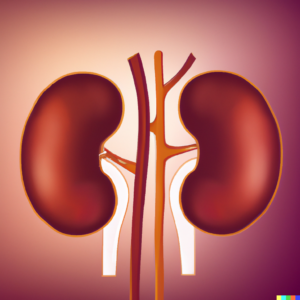
The kidneys are two bean-shaped organs that form an important part of the urinary system. They sit at the back of the abdomen, just below the ribcage, on either side of the spine. One of their best-known functions is removing waste products from the body through urine. The kidneys also perform a number of other important functions, including: filtering the blood that flows to the heart; regulating the body's fluid balance; regulating and filtering minerals in the blood; filtering out waste products from food, medicines and toxic substances; producing hormones that help make red blood cells; supporting bone health; and helping to regulate blood pressure.
Kidney function
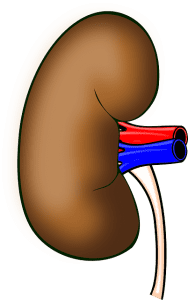
In medical terms, kidney function refers to the ability of an organ to filter blood, through which waste products and excess fluids are removed. In the case of the kidneys, this takes place within their internal structures, which is why they are shaped in this way, resembling a bean. Through this filtration, the kidneys remove waste from the blood, which is then carried through the renal artery, which brings oxygen-rich blood from the heart to the kidneys. The renal vein then carries the filtered blood back to the heart.
Nephrons
Nephrons are the most important structural units of each kidney. They receive blood, metabolise nutrients and help remove waste materials from the filtered blood. Each kidney contains around one million nephrons. Each of the nephrons has its own internal structures, just like the body itself.
After blood passes through the nephrons, it leaves the body through the renal tubules, which have two additional structures. One is a collection of glomeruli - capillaries that absorb proteins from the blood, which are then removed through the renal tubules. The second is Bowman's capsule, or the glomerular capsule, which contains the filtrate (the primary urine) after the absorption of important elements from the glomeruli. This filtrate then moves further along the renal tubule system (the urinary tubules).
The renal tubule system begins after Bowman's capsule and ends in the collecting ducts. Each duct consists of several parts:
The proximal convoluted tubule - through it, sodium, water and glucose are absorbed, which return to the blood;
The loop of Henle - this part absorbs additional water, chloride and sodium from the urine;
The distal convoluted tubule - through this tubule, more sodium is absorbed into the blood, while potassium and acid are excreted;
Once this section of the tubule is complete, the urine is concentrated and rich in urea. Urea is a waste product of protein metabolism that is contained in the urine.
Renal cortex
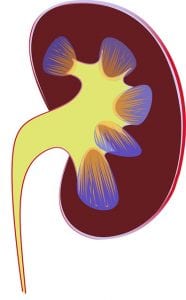
The renal cortex is the outer part of the kidney. It contains the glomeruli and the renal tubules. The renal cortex is surrounded by the fibrous renal capsule, and between them there is a thin layer of tissue. The renal cortex and the capsule protect and support the internal structures of the kidney.
The renal medulla is the inner tissue of the kidney, where the pyramids of Henle and the renal pyramids are found. The renal pyramids are small structures that contain nephrons and the tubules. These tubules transport substances in the kidneys. The collecting tubules are at the exit point, through which the filtered substances pass into the kidney pelvis. From there the substance moves to the last stage before the urine leaves the kidneys, namely the ureter. This is part of the path of urine between the kidneys and the bladder. Here further substances are added and further filtration takes place, so that the final urine is formed, which is stored in the bladder before it reaches the urinary tract. The urine then leaves the body through the urethra (a tube of muscle that directs the urine out of the bladder, from where it is passed out of the body).
Kidney diseases
Due to their vital function, the kidneys are susceptible to a variety of problems. Some of these problems include:
Chronic kidney disease
Chronic kidney disease refers to conditions that develop over time and in which the kidneys cannot cope adequately with their usual functions, such as filtering the blood or balancing the amount of fluids. In the later stages these problems can progress to kidney failure. This type of disease is often secondary to other conditions such as diabetes or hypertension. It is advisable to take these conditions seriously early on, before they lead to serious complications and damage to the kidneys.
Kidney insufficiency
Kidney insufficiency means that the kidneys are not able to filter the blood sufficiently well. This condition may be the result of serious illnesses, damage to the kidneys, obstruction of the urinary tract and so on. It is an exceptionally serious condition, in which a person needs to be placed on dialysis. This is a machine that filters the blood instead of the kidneys, and it can be portable or large, depending on the need. With regular visits for dialysis and taking medical instructions, a person can live a relatively normal life before the condition. A transplant may also be considered.
Kidney stones
Kidney stones are hard particles that form in the kidneys, but they can also be found in other parts of the urinary system. This is due to an imbalance of substances or disorders in function, as the stones can be made of different bases such as calcium, uric acid, cystine and so on. The seriousness of this condition depends on the size, the nature and the location of the stone.

Glomerulonephritis
Glomerulonephritis is a serious disease in which the glomeruli become inflamed. It may lead to kidney insufficiency, which is why it is extremely important to be treated in time.
Acute nephritis
Acute nephritis is a condition in which the kidneys are inflamed and their function is impaired. It is an exceptionally serious condition, because it can lead to permanent kidney damage.
Polycystic kidney disease
Polycystic kidney disease is the most common genetic kidney disease, and it is inherited. It is often followed by other diseases of the kidneys. It causes many cysts in the kidneys. These cysts do not normally show symptoms until they begin to appear, which is why they are dangerous, as they can damage the kidney function and lead to kidney insufficiency.
Urinary tract infections
Urinary tract infections are diseases caused by microbes, which can be found in any part of the urinary tract, including the kidneys, ureter, bladder and urethra. Most often the symptoms are associated with pain when urinating, which, unlike other kidney diseases, is not only serious.
Acidosis
Acidosis is a condition in which the pH in the body is disturbed. Much of the body's processes are linked to the production of acids, and in most cases the kidneys and lungs can compensate, but when their function is impaired, this becomes more difficult. The most common symptoms include breathing problems, confusion, fatigue, and so on. It is advisable to be checked and treated at an early stage.
Uraemia
Uraemia is a condition in which the kidneys' filtering of urea is impaired, causing toxins to build up in the blood. It is one of the final stages of chronic kidney disease, where treatment requires dialysis or a kidney transplant.
Hydronephrosis
Hydronephrosis is a condition that appears when the kidney swells as a result of obstructions in the flow of urine to the bladder. It is a secondary condition, most often caused by primary diseases such as urolithiasis, kidney stones and so on. When this disease is not treated for a long time, complications may arise, as the kidneys begin to atrophy and the body becomes infected in other organs.
Pyelonephritis
Pyelonephritis is an acute infection of the kidneys. It most often begins in the lower part of the urinary tract and spreads upwards. This disease needs to be treated promptly after diagnosis, as otherwise it can lead to permanent damage.
Kidney cyst
A kidney cyst is a sac filled with fluid. In the case of an isolated cyst (a single cyst that is not due to a congenital defect or genetic characteristic) it has a thin wall, and its size can vary. This cyst often does not affect the function of the kidneys and is treated through a surgical procedure that removes the cyst.
Nephrotic syndrome
Nephrotic syndrome is not a specific disease, but rather a group of symptoms of poor kidney function, such as protein in the urine, low protein levels in the blood, high levels of fats and cholesterol in the blood, and so on. Nephrotic syndrome is treated mainly by treating the symptoms and the factors that cause it.
Azotaemia
Azotaemia is a condition in which the kidneys are unable to cope well with their function because of infection, another disease or a congenital defect. In this disease, treatment and seriousness depend strictly on the cause and the degree of progression, and it may be temporary as well as permanent.

These are some of the most common kidney diseases. Many of them are serious and require urgent measures, so for early symptoms such as pain in the kidneys or blood in the urine, or after an injury to the back, it is good to consult a doctor.
Symptoms of kidney problems
Due to the different nature of kidney problems, a variety of symptoms may be observed. Some of the most common include:
- Back pain
- Vomiting
- Loss of concentration
- Dry and itchy skin
- Changes in urination (such as frequency, and also strength of the stream)
- Foamy and/or dark urine
- Swelling around the eyes
- Swelling of the ankles or the feet
- Reduced appetite
- Muscle cramps
- Blood in the urine
- Severe unpleasant smell of the urine
- High blood pressure
- Bone pain
- Pain when urinating
- Headache
- Pain in the groin (depending on the location of the pain, it may indicate kidney stones)
- Pain in the upper part of the stomach

These are just some of the most common symptoms of kidney problems. Each disease has its own specific symptoms or a complex of them. Often some of these symptoms may indicate another problem, but when a complex of symptoms appears, it is good to pay attention and consult a doctor. Symptoms such as urinary changes, swelling, skin problems, muscle pain, and changes in urination should be looked at seriously.
Risk factors for kidney problems
- Diabetes is an exceptionally serious disease, which tends to have an epidemic character in recent times, as it upsets the chemical balance in the body and the metabolism of substances. Kidneys are directly affected by this, because the excessive amount of glucose gradually damages the kidneys, as diabetics have a much greater predisposition to a large number of kidney diseases. Learn everything about diabetes: /diabetes-everything-you-need-to-know/
- High blood pressure is also a key factor, because it constantly strains the kidneys and their functions.
- High blood pressure - this is a problem that has a direct impact on the flow of blood to the kidneys and their functions. You can learn more about high blood pressure: /high-blood-pressure-causes-symptoms-complications/
- Genetic predisposition to diseases of the kidneys.

Research to identify kidney problems
Some of the most common tests used to identify kidney problems are various urine tests. In this way it is possible to establish how well the kidneys are working, whether there is a high level of proteins in the urine, whether there are infections, whether there are kidney cells, the osmolarity of the urine and so on.
Kidney problems can also be identified through a full blood count, as the kidneys produce erythropoietin, a hormone that participates in the control of bone marrow and the production of red blood cells. In such cases, a change in the number of red blood cells may be an indication of kidney problems. Problems may also be identified through immunological tests, namely a urine test for protein levels, creatinine, white blood cells, albumin or anaemia. The levels of potassium in the blood and the electrolyte balance may also be studied, as these are key functions that the kidneys take care of. Additional more complex studies may include an ultrasound of the kidneys, as well as taking a tissue sample from the kidneys, as the seriousness of the disease may require invasive methods of study.

It is important to remember that there may be many other tests, as the kidneys affect many other organs and symptoms. Each disease requires a specific set of tests for correct diagnosis and to establish the seriousness of the problem.
Tips for healthy kidneys
The kidneys are vital organs that support the overall function and health of the body, including the cardiovascular system and blood pressure, so it is good to take care of them attentively.
It is always advisable to lead an active lifestyle, as regular movement encourages useful processes in the body such as increasing oxygen, improving metabolism and supporting the nervous system. Sport is good for the kidneys, because it lowers high blood pressure, and blood pressure and kidney health are closely linked.
Regarding nutrition, it is important to follow a few rules:
Reducing salt intake - this is important, because it affects the cardiovascular system and because it affects the balance of minerals in the body.
You can learn more about sodium and its role in the body: /sodium-everything-you-need-to-know/
It is advisable to replace processed foods with fresh alternatives such as fresh fruit and vegetables, unprocessed meat and so on. Above all, processed shop foods (fried potatoes, chips, bacon etc.) should be avoided, as they strongly affect the cardiovascular system, and it is closely linked to the kidneys.
It is essential to drink plenty of water. The average daily intake should be at least one and a half litres. Water has specific physical and chemical functions that only it can carry out, so consuming other liquids does not replace drinking water, while drinking sugary drinks, alcohol or other harmful beverages can put strain on the body instead of being beneficial. Drinking water is essential for the kidneys to perform their function normally.

Be mindful of the use of medicines. It is good to consult your doctor when taking medicines for a long period of time, as some drugs and medicines without prescription, such as non-steroidal anti-inflammatory drugs, can damage the kidneys over a long period of use.
Detoxify with DetoxiFive. DetoxiFive is a specially developed formula for cleansing the body, as its ingredients are created to cover all the mechanisms for cleansing the body. Regarding the kidneys, DetoxiFive contains a special standardised extract of lespedeza, which soothes the kidneys and stimulates their function, namely the granular particles of the kidneys. Learn more: /products/detoxifive/
Conclusion
The kidneys are organs made up of many fine particles, which are responsible for the body's detoxification function. The blood flows through the renal artery into the kidneys, and it is precisely because of this intricate structure that they resemble a bean. The filtered blood then returns through the renal vein. The kidneys separate unnecessary substances from the blood, which then return to the heart. Initially, the separated substances from the kidneys pass through an additional filtration, and some of them are reabsorbed, adding further substances, so urine is formed, which is held in the bladder before it reaches the urinary tract. The kidneys are both responsible for the filtration of the blood and for regulating the content of minerals in the body, the total amount of fluids, the blood pressure and the production of some hormones.
The kidneys are an exceptionally complex organ, made up of many fine particles, so for their function of detoxification of the body, and there are many diseases that can affect them. With symptoms such as changes in urination, as well as skin changes and problems with concentration, it is good to consult a doctor. It is not advisable to ignore pain around the kidneys, because diagnosing most problems with the kidneys at an early stage allows timely measures to be taken. Most diseases of the kidneys are incurable at a late stage.
Preventive measures: the most important is to stay active, to keep hygiene, to drink more water (clean water, not other liquids), because this way you reduce the kidneys' workload and the physical health of the whole body.
If you want to learn more about the overall cleansing of the body, which includes the kidneys, you can get our free book for body detox. Click HERE!
Always remember that you can support your body with DetoxiFive, which helps cleanse the entire organism, as well as specifically the kidneys.

Share the article:
Latest articles
Memory
There are many types of memory, from short-term and sensory memory to associative forms. Here is how we learn, store and recall information.
Amylase
Amylase is an enzyme secreted by the pancreas and the salivary glands. It begins breaking down starch in the mouth, turning complex carbohydrates…
Comments