Semen Quality
· 6 min read

Semen is a pale, milky fluid that carries sperm out of the body during ejaculation. It contains spermatozoa, fructose and enzymes that help the sperm to move and to survive on their own.
Physiology
The purpose of semen is to bring spermatozoa close to the egg cell. Sperm are produced in the testicles. They are stored as a thick, concentrated paste and mixed with fluids before ejaculation, so they are not released alone and dry, but are carried in the fluid that lets them travel.
The production process of semen is particularly long and involves several organs.
The tests that are found in the scrotum are two small organs that produce sperm and testosterone. The epididymis (the epididymis) is a long tube, placed close to each test, that transports the sperm to the seminal duct. The seminal duct is a tube that connects the epididymis and the urethra (the duct through which urine and semen leave the body). The seminal vesicles store the sperm and secrete a fluid just before ejaculation. The seminal vesicles are tor-shaped glands located behind the bladder that produce semen fluid. The prostate is a small gland that surrounds the top of the urethra and produces the fluid that makes up part of the semen. It helps to keep the spermatozoa mobile and the acidity of the fluid balanced. Its secretion makes up more than 1% of the total composition of the semen.
The semen fluid contains: fructose, ascorbic acid, zinc, cholesterol, protein, calcium, chlorine, polyunsaturated antigens, citric acid, DNA, magnesium, vitamin B12, phosphorus, sodium, potassium, sialic acid, lactic acid, nitrogen and other nutrients.
To ensure the mobility and quality of the sperm and the semen fluid, it is advisable that a person supplies the necessary elements. ZinSeD contains highly usable forms of zinc, selenium and vitamin C, which are needed for semen quality.
You can learn about the mechanism of action of ZinSeD at the following link: /products/zinsed/
Ejaculation process
Semen is released during ejaculation.
Ejaculation is controlled by the central nervous system, when there is a stimulus between the genitals or another type of sexual stimulation. This type of stimulation moves through the spinal cord and reaches the brain. Ejaculation is a complex process, and the containing of the final semen fluid is collected in the back part of the urethra and is mixed directly before ejaculation.
Ejaculation is divided into two phases.
Emission
In this phase the epididymis (the tubes that store and transport the sperm from the testicles) are contracted, so that the sperm move to the base of the urethra through the seminal duct after the vas deferens. The seminal vesicles (seminal glands) join the process, and the prostate adds its fluid. In this phase ejaculation is not yet possible.

Expulsion
In this phase the muscles at the base of the penis and the urethra contract. This process expels the semen fluid outside through the urethra. At this stage the bulb of the urethra contracts to prevent the backward flow of semen into the urinary tract. It is possible to continue ejaculating without expulsion. Typically the erection subsides after expulsion.
Composition of semen
Sperm make up a small part of the semen, which is combined with the sperm. The seminal vesicles produce most of the volume, rich in fructose, which provides energy for the spermatozoa.
The rest of the semen is mostly fluid from the prostate, which contains enzymes, citric acid, zinc and cholesterol. The sperm and the semen fluid combine to form the whole ejaculate, which is about 3.4 millilitres per ejaculation on average.
What does the pre-ejaculatory fluid represent and does it contain sperm?
This fluid is separated in the penis at the initial stage of sexual stimulation and serves as a natural lubricant for the male urethra. In most cases, it does not contain spermatozoa, but if there are remains of sperm in the urethra, they may be mixed with it. Some probes at the pre-ejaculatory fluid establish the presence of active and mobile spermatozoa.
Is it possible to see the spermatozoid?
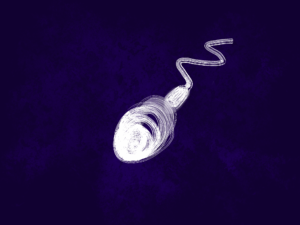
Only through a microscope, as it is exclusively small - the average sizes are 4.3 micrometres long and 2.9 micrometres wide.
How much semen fluid and spermatozoa are ejaculated?
The volume of the semen fluid varies, but it is on average about 3.4 millilitres per ejaculation.
During a long period between two ejaculations, the quantity of sperm in the semen fluid increases, which increases the total volume of the fluid.
The quantity of spermatozoa varies from 15 to 200 million per millilitre, as the interval is considered normal.
Many factors may affect the quantity of semen fluid and the spermatozoa in it, including diet, storage habits, genes and overall health. Age is also of significant importance. Some studies claim that you may produce the greater part of semen fluid before the age of 30.
With the increase of age, other factors also influence the male reproductive system, including the prostate, which is of significant importance for semen quality. ProstaRen contains high-quality extract of pumpkin, which supports the health of the prostate, in combination with grape seed with strong antioxidant effect and organic selenium, which is of great importance for spermatogenesis. You can learn about the mechanism of action of the following link: /products/prostaren/
How long do spermatozoa live?
This depends on the environment in which they end up, after the male organism is released. If the sperm ends up in the female reproductive system, it may survive up to 5 days, thanks to the preserving action of the cervical mucus. In other cases, it dies within minutes. Heat and water also kill sperm more quickly.
How long does it take the body to produce sperm?
The testicles never stop trying to produce sperm, although mobility and quality decrease significantly after 50 years of age. The whole process from cell to spermatozoid takes about 74 days.
ProstaRen - whole-body support for the male prostate: /products/prostaren/
Conclusion
Sperm and semen fluid are different things. The first refers to the spermatozoa that carry out the fertilisation itself, and the second is the totality of sperm and other components that help the egg cell to be reached and keep the sperm alive and healthy.
Semen quality develops over a long process, in order to produce it. It begins with the production of spermatozoa and ends in the urethra, where the final semen content is mixed.
Ejaculation is a two-phase process, during which semen fluid releases the sperm.
The state of the spermatozoa and semen quality is directly connected with the beginning of life and the health condition.
ZinSeD: /products/zinsed/
ProstaRen: /products/prostaren/
Share the article:
Latest articles
Memory
There are many types of memory, from short-term and sensory memory to associative forms. Here is how we learn, store and recall information.
Amylase
Amylase is an enzyme secreted by the pancreas and the salivary glands. It begins breaking down starch in the mouth, turning complex carbohydrates…
Comments