Crohn's Disease
· 10 min read

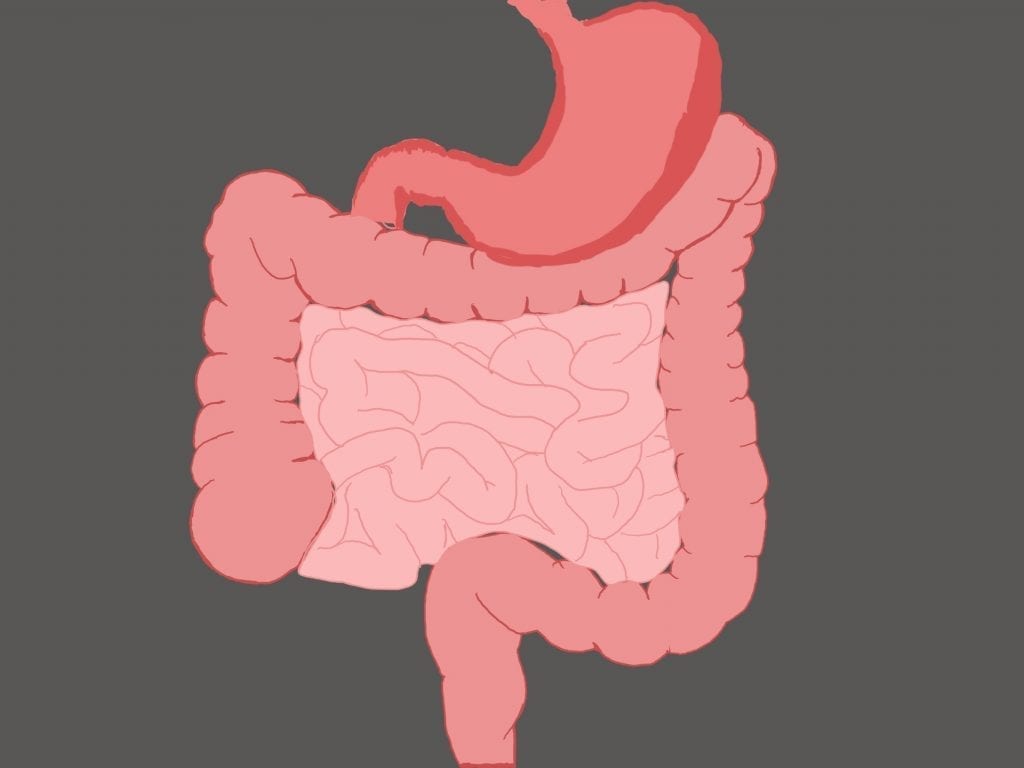
Crohn's disease is a chronic inflammatory bowel condition that can affect any part of the digestive tract. It causes the digestive system to become inflamed, which can lead to abdominal pain, diarrhoea, fatigue, weight loss and a reduced ability to absorb nutrients.
Inflammation caused by Crohn's disease, can affect different parts of the digestive tract in different people. It often develops in the deeper layers of the bowel.
The condition can be particularly debilitating and disruptive, as it can sometimes lead to life-threatening complications.
As there is no cure for Crohn's disease, treatment aims to reduce the various symptoms and complications. Such treatment often allows many people to live a fairly normal life with the condition.
Causes
The exact cause of Crohn's disease is still unknown. It was once thought that diet and stress played a major role, but specialists now assume these may be contributing factors rather than the main causes.
Several factors may together be key to its development.
Immune system
Crohn's disease may be caused by a virus or bacteria, but scientists have yet to identify the exact triggers. When the immune system tries to fight off a microorganism with excessive force, an abnormally high immune response may cause the protective cells to attack the digestive tract itself.
Heredity
Crohn's disease runs in families, so genes may be a predisposing factor. On the other hand, family history plays less of a role in most cases, as most people with the disease have no relative who also has Crohn's disease.
Risk factors
Age
Crohn's disease can appear at any age, but it is more likely to develop in young adults. Most people develop the disease before the age of 30.
Family history
A person has a higher risk of the disease if they have a first-degree relative who has had it, for example a parent, sibling or child. Around 1 in 5 people with the disease have a relative with Crohn's disease.
Smoking
Smoking is the most important factor that can be controlled and on which the development of the disease depends. Smoking also increases the risk of complications, including the risk of needing surgery. It is advisable to quit smoking in order to keep your health in good shape.
Non-steroidal anti-inflammatory drugs
This type of medicine includes ibuprofen and diclofenac, and various trade brands under which they are sold; naproxen sodium; diclofenac sodium and others. These medicines do not cause Crohn's disease, but they may trigger inflammation of the intestine and worsen an existing form of the disease.
Symptoms
Crohn's disease can affect any part of the small or large intestine, and may affect several segments at once.
Signs and symptoms of Crohn's disease can range from mild to severe. Most often they develop gradually, but sometimes they appear suddenly without any warning. A person may have periods without any signs or symptoms when the disease is in remission.
When the disease is active, symptoms may include: diarrhoea, fever, fatigue, stomach pain and cramps, blood in the stools, mouth ulcers, reduced appetite or weight loss; pain around the anus caused by inflammation; fistula.
People with a more severe form of Crohn's disease often develop inflammation of the skin, eyes and joints; inflammation of the liver and bile ducts; kidney stones; iron deficiency or anaemia; and delayed sexual development (in children).
Learn more about haemorrhoids: /kidneys/
When to see a specialist
A person should contact a doctor promptly if they experience: persistent changes in bowel habits, prolonged stomach pain, blood in the stools, pain or bleeding on passing stools, persistent diarrhoea, prolonged fever, unexplained weight loss.
Complications of Crohn's disease
Crohn's disease may lead to the following complications:
Intestinal narrowing
Crohn's disease may cause the entire thickness of the intestinal wall to become narrowed. Over time, parts of the intestine may be damaged and narrowed, which can block the passage of intestinal contents. In the worst case, surgery may be needed to remove the affected part of the intestine.
Ulcers
Chronic inflammation can lead to open sores (ulcers) anywhere along the digestive tract, including the mouth, the anus and the genital area.
Fistulas
Sometimes an ulcer may extend and break through the intestinal wall, creating a fistula, an abnormal connection between different parts of the body. Fistulas may form between the intestine and different parts of the skin, or between the intestine and the bladder, vagina or other organs. Fistulas near the anus are the most common.
When fistulas develop near the bowel, food may bypass the areas of the intestine needed for absorption. Fistulas may form in various folds of the intestine, around the bladder, in the vagina or through the skin. This leads to a continuous leakage of intestinal contents onto the skin. If this condition is not treated, it can lead to serious problems, including life-threatening conditions.
Anal fissure
An anal fissure is a small tear in the tissue in or around the anus, where an infection can develop. It is often associated with painful bowel movements, and it can lead to the formation or worsening of a fistula.
Lack of nutrients
Diarrhoea, intestinal pain and cramps can make it difficult to store and absorb enough nutrients. It is also common to develop anaemia due to a lack of iron or vitamin B12.
Colon cancer
Crohn's disease can affect various parts of the colon, which may increase the risk of developing cancer. In principle, it is good to have the colon checked regularly, even without Crohn's disease, every ten years after a colonoscopy or after reaching the age of 50. It is advisable to consult a specialist about how often these tests should be done.
Other health problems
Crohn's disease may lead to various health problems in other parts of the body, such as anaemia, skin problems, osteoporosis, arthritis, gallstone problems and eye inflammation.
Learn more about osteoporosis: /osteoporosis-everything-you-need-to-know/
Learn more about diabetes: /diabetes-everything-you-need-to-know/
Learn more about high blood pressure: High Blood Pressure: Causes, Symptoms, Complications and Management
Consulting a specialist and getting an accurate diagnosis and proper treatment is important.
Diagnosis
There are various methods that can be used to diagnose Crohn's disease.
A questionnaire can establish whether there are other causes of the symptoms. There is no single test that can confirm the presence of the disease.
Specialists will probably use a combination of tests to confirm the diagnosis of Crohn's disease.
Laboratory tests
Blood tests
The specialist may order blood tests to check for anaemia, a condition in which there are not enough healthy red blood cells to carry adequate oxygen to the tissues. Blood tests may also detect the presence of infection.
Stool testing
Stool samples may be tested to detect blood or organisms such as parasites.
Procedures
Colonoscopy
This test allows the doctor to see the entire large intestine, using a thin flexible tube with a camera at one end. During the procedure a small sample of tissue (biopsy) may also be taken for laboratory analysis, which can help confirm the diagnosis. Clusters of inflammatory cells, called granulomas, may help confirm the diagnosis.
Computed tomography
A person may undergo computed tomography to establish the disease. This is a special type of X-ray that gives more information than a standard X-ray. This test examines the intestines together with the tissue outside them.
Magnetic resonance
Magnetic resonance uses a magnetic field and radio waves to create detailed images of organs and tissues. It is useful for establishing the presence or development of fistulas near the anus or in the intestinal tissues.
Capsule endoscopy
For this test the patient swallows a capsule that contains a camera. The camera takes pictures of the intestinal tissue and sends them to a recorder worn on a belt. These images are then transferred to a computer and reviewed on a monitor to check for signs of Crohn's disease. This type of examination is not suitable if a person has swallowing problems or other conditions that impede the movement of intestinal contents.
Balloon enteroscopy
This is a method by which the doctor can examine the intestines more deeply using an enteroscope with a balloon. The technique is used for more detailed visualisation after abnormalities have been detected with another testing method.
Treatment
There is currently no cure for Crohn's disease, but there are medicines and other strategies to reduce and control the symptoms.
Medicines
Some people with Crohn's disease take steroids for a short time to reduce inflammation.
Diet
Some children, or people in younger age groups, may be recommended a liquid diet, in which special drinks containing all the necessary nutrients are consumed.
Immunosuppressants
Sometimes immunosuppressants are needed to reduce the activity of the immune system.
In some cases biological medicines, such as injections, may be prescribed.
If medicines do not work well enough and the risks increase, surgery may be considered. Most often the surgery involves removing the affected part of the intestine and stitching the healthy sections back together.
Living with Crohn's disease
Medicines
Some medicines may trigger or worsen the symptoms of the disease, for example ibuprofen. It is advisable to consult a specialist before taking medicines, especially if they affect stomach cramps or diarrhoea.
Pregnancy
Many women who suffer from Crohn's disease can have normal pregnancies and healthy babies, but some medicines may affect the pregnancy. A person should consult a specialist when they wish to conceive, so that potential risks and alternative treatments can be discussed.
Enzy-Mill
Enzy-Mill is a combination of the seven most important digestive enzymes. It is specially developed to support digestion, as digestive enzymes are essential because they catalyse the breakdown and absorption of nutrients. Enzy-Mill is a high-quality natural product that supports digestion and helps with discomfort associated with it, such as bloating, gas, fullness, heaviness, cramps and discomfort in the stomach area.

Enzy-Mill supports the breakdown and absorption of nutrients, improves vitality and brings lightness to the body. Learn more: /products/enzymill/
Healthy microbiome
In Crohn's disease, the intestinal microbiome (the total of all microorganisms that live in the intestines) is directly linked to the condition of the digestive tract. When the balance between beneficial and potentially harmful bacteria is disrupted, this can contribute to more pronounced intestinal discomfort, diarrhoea, bloating and a more sensitive reaction to certain foods. For this reason, supporting the intestinal microflora is an important part of the overall approach to gut health, alongside specialist treatment and a suitable diet.
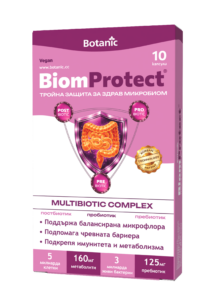
BiomProtect is a multibiotic with postbiotic, probiotic and prebiotic components, which supports the maintenance of a healthy intestinal balance. The postbiotic has a direct effect when taken, as it supports the intestinal wall, which helps its integrity and the attachment of pathogenic bacteria. The probiotic is protected by the patented LAB2PRO® technology, which ensures up to 100 times higher survival of the beneficial bacteria. The prebiotic nourishes only the beneficial bacteria.
BiomProtect is suitable during and after antibiotic treatment, for diarrhoea, dysbiosis, IBS, and for daily microbiome support.
Learn more about BiomProtect!
Conclusion
Crohn's disease is a special type of inflammation that disrupts digestion and can lead to serious problems in the digestive tract. The disease can affect any part of the intestine or large bowel, and several parts at the same time.
The exact causes of the disease are not fully explained. One theory involves an excessively strong immune reaction that attacks the digestive tract.
Risk factors may include: age, family history of Crohn's disease, ethnicity, smoking and the use of certain medicines.
Symptoms depend on whether the disease is in an active phase or in remission. They may develop gradually or suddenly, and include: diarrhoea, fever, fatigue, stomach pain and cramps, blood in the stools; pain around the anus caused by inflammation; fistula.
Diagnosis often involves questions, as well as laboratory or procedural tests. Various procedures aim to examine the intestine and its condition.
The complications of Crohn's disease are unpleasant and include intestinal narrowing, as well as other conditions such as anaemia, anal fissure and others.
Unfortunately there is no cure for the disease, but there are methods to manage the symptoms and flare-ups, and many people manage to live normally despite the condition.
Learn more about proper storage: My food, my health
Enzy-Mill - for a comfortable stomach!
BiomProtect – a daily dose for a healthy microbiome!
Share the article:
Latest articles

Memory
There are many types of memory, from short-term and sensory memory to associative forms. Here is how we learn, store and recall information.
Amylase
Amylase is an enzyme secreted by the pancreas and the salivary glands. It begins breaking down starch in the mouth, turning complex carbohydrates…
Comments