Gout
· 12 min read

Gout is a common and complex form of arthritis that can affect anyone. It is characterised by sharp pain, swelling and redness of the joints, most often the joint at the base of the big toe.
The attack can come on suddenly, as it often happens at night and can wake you up. The pain is intense and the joint is extremely tender.
The affected joint is hot and swollen, and often so sensitive that even the weight of a bedsheet can feel unbearable.
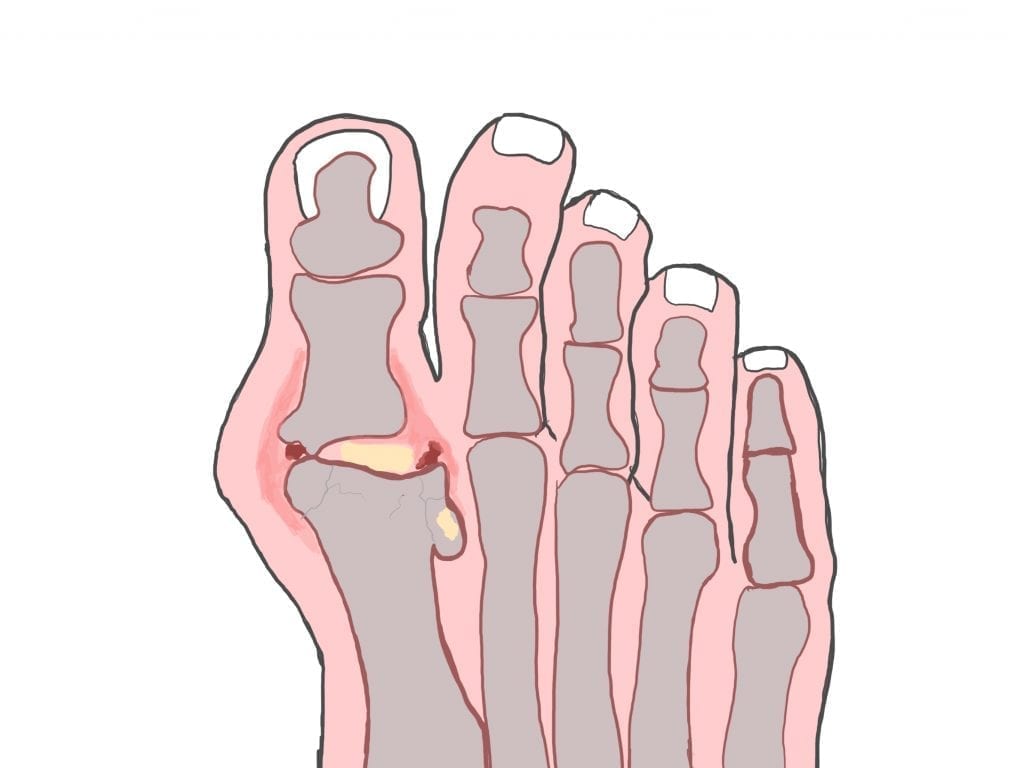
Physiology of gout
Gout develops when uric acid crystals build up in the joints, causing sharp pain and inflammation. The crystals form when uric acid levels in the blood are high. The excess uric acid comes from the breakdown of purines in the body.
Purines are found in a range of foods such as offal, sardines and other seafood. Some drinks also raise uric acid levels, especially alcohol (beer in particular) and sugary drinks.
Normally uric acid dissolves in the blood and is removed from the body through the kidneys and urine. Sometimes the body produces too much uric acid, or the kidneys remove too little of it. When this happens, uric acid builds up and forms sharp, needle-like crystals in the joints or surrounding tissues, which causes pain, swelling and sensitivity.
You can support your kidneys and the removal of waste with DetoxiFive. Learn more: /products/detoxifive/
Risk factors
Gout is more likely when a person has higher levels of uric acid in the body. There are several factors that can keep these levels high.
Diet
Foods rich in purines, especially when combined with certain drinks, significantly increase uric acid. Alcohol and beer also contribute to its build-up.
Excess weight
People carrying excess weight tend to produce more uric acid, and their kidneys may find it harder to remove it.
Health conditions
Some conditions may increase the risk of gout. Examples include high blood pressure, as well as long-term conditions such as diabetes, metabolic syndrome, and heart and kidney disease.
Long-term diabetes can lead to serious problems with the heart and kidneys. You can learn everything you need to know about diabetes here: Diabetes: everything you need to know
To help maintain normal blood sugar levels, you can rely on DiabeFor Gluco.
You can support your kidneys and the removal of waste through DetoxiFive. Learn more: /products/detoxifive/
Medicines
Medicines such as thiazide diuretics (often used to treat high blood pressure) and low-dose aspirin can raise uric acid levels. Medicines prescribed after an organ transplant can also bring on gout.
Family history of the disease
If a parent or sibling has had gout, this significantly increases the risk of another family member developing the condition.
Age and sex
Gout is much more common in men, as they have significantly higher uric acid levels than women. After menopause, women's levels rise closer to those of men. You can learn more about menopause: /menopause-everything-you-need-to-know/ Men are more likely to develop gout at a younger age (between 30 and 50), while in women symptoms are more likely to appear after menopause.
Recent surgery and injury
Surgical operations and injuries are associated with a greater risk of gout attacks.
Symptoms
Gout attacks can come and go. Symptoms usually appear suddenly, often during the night, and include:
Severe pain
Usually felt in the affected joint, the pain can spread to other joints, most commonly the knees, elbows, wrists, ankles and fingers. It is most intense in the first 12 hours after it starts.
Lingering discomfort
After the most severe pain has subsided, some discomfort in the joint may last for days or weeks. More serious attacks can last longer and affect more joints.
Swelling and redness
The affected joints are swollen, red, tender and warm to the touch.
Limited range of movement
If an attack becomes severe and prolonged, it may restrict the normal movement of the joints.
Complications
People who suffer from gout may also develop some of the following conditions.
Recurrent attacks
Some people experience a gout attack only once in their lifetime, others several times a year. Medicines and changes in lifestyle can help prevent repeat attacks, but if the condition is left untreated, the joint can erode and be permanently damaged.
Advanced gout
Untreated gout can lead to urate crystals depositing in the skin, forming lumps called tophi. These lumps can form in several parts of the body, namely the fingers, hands, feet, elbows or the Achilles tendons at the back of the ankles. The lumps are often painless, but they can swell and become very sensitive.
Kidney stones
Urate crystals can collect in the urinary tract, which makes it harder for the body to pass them and can lead to kidney stones. You can learn more about the kidneys.
When to seek professional advice
If you have severe pain (especially in the base of the big toe) or the joint is very swollen and red, you should consult a specialist. Ignoring the pain can lead to damage to the joint and the tissues around it.
If you notice a lump and/or excessive swelling or redness of the joints and/or fever or signs of infection, you should see a specialist without delay.
Diagnosis
Doctors can usually confirm gout through a physical examination and related questions. If this is not enough, they may order some of the following tests.
Synovial fluid test
For this test the specialist uses a needle to take a sample of fluid from the affected joint. The crystals can be observed under a microscope.
Blood test
The doctor may order a blood test to measure the level of uric acid and creatinine. Blood tests may be inconclusive, as some people may have high uric acid levels without ever experiencing gout. The reverse is also true: a person can have gout while their uric acid levels are within the normal range.
X-ray
An X-ray of the joints can be useful to rule out other causes of the inflammation.
Ultrasound
An ultrasound can detect the presence of urate crystals in the joints.
CT scan
This type of scan can establish the presence of urate crystals in the joints, even when the joint itself is not severely inflamed. This test is rarely used, as it is expensive and only available in a few medical facilities.
Treatment
Depending on how serious the condition is, a specialist may prescribe medicines or recommend changes to diet and lifestyle, along with the introduction of useful supplements.
When medicines are needed, they should be coordinated with the patient's overall health.
Conventional medicines for gout
The following medicines may be prescribed both to relieve an attack and to reduce the chance of future attacks.
Non-steroidal anti-inflammatory drugs
This type of medicine, available without prescription, such as ibuprofen and naproxen, is commonly used to relieve pain and inflammation. Prescription versions are available in higher doses. Their side effects can include stomach pain, bleeding and kidney problems, so they should be used with care.
ForFlex is a natural product with glucosamine, extracts from boswellia and ginger, which has a similar soothing and anti-inflammatory effect. You can learn more about ForFlex: /products/forflex/
Colchicine
The specialist may prescribe this medicine to relieve pain, but its side effects include nausea, vomiting and diarrhoea, especially at high doses. It is therefore recommended that this type of medicine is only taken when absolutely necessary.
Corticosteroids
Corticosteroids, taken as a pill or injected into the joint, can control inflammation and pain. They are usually used only during an attack, when non-steroidal medicines cannot be taken. Side effects of corticosteroids can include mood changes, higher blood sugar levels and increased blood pressure.
Conventional medicines to prevent gout complications
In cases of frequent attacks, a specialist may prescribe medicines that reduce the risk of complications. This matters when there are joint deposits, tophi or long-term kidney problems. In these situations, medicines that lower uric acid levels may be prescribed.
Medicines that block the production of uric acid
Medicines called xanthine oxidase inhibitors, including allopurinol and febuxostat, limit the amount of uric acid the body produces. This can lower the level of uric acid in the blood and reduce the risk of gout.
Side effects of allopurinol include rash and may reduce the activity of the immune system. Side effects of febuxostat include rash, nausea, reduced liver function and an increased risk of cardiac death.
Learn more about the liver: {{article:cherniqt-drob}}
Medicines that help remove uric acid
These medicines, called uricosurics, include probenecid and lesinurad. Uricosuric medicines improve the kidneys' ability to remove uric acid from the body. This can lower uric acid levels and reduce the risk of gout, but the level of uric acid in the urine rises. Side effects include rash, stomach pain and kidney stones.
Alternative treatment methods
Some foods and drinks show promising results in the treatment of gout.
Coffee
Coffee, both regular and decaffeinated, appears to lower uric acid levels, but the exact mechanism by which this happens has not yet been fully explained.
The evidence is not sufficient to encourage people to start drinking coffee, but it shows promise for the search for natural ways to treat gout.
Vitamin C
Taking vitamin C may help lower uric acid levels in the body. However, there is no observed evidence that vitamin C intake reduces the frequency and severity of gout attacks.
You can get a high-quality vitamin C extract from acerola with Ceget+.
You can get a high-quality form of vitamin C that does not upset the stomach with ZinSeD. Learn more: /products/zinsed/
Cherries
There are research studies showing that cherries may lower uric acid levels and affect the frequency of attacks. Some varieties of cherry show a stronger effect than others. Cherries can be consumed in raw form, such as juice, extract, or in any other form, as the intensity of the effect depends directly on the quantity.
Golden rod
Golden rod has a useful role in reducing uric acid levels in the body. Traditional medicine has long used its natural properties in the fight against gout. It is a diuretic, which means it increases the excretion of fluid, mainly by increasing urine output. Unlike other remedies, golden rod does not disrupt the natural balance in the body and helps maintain health.
A high-quality golden rod extract can be found in the product CystiRen.
Additional techniques
Other supportive and alternative approaches can help manage the condition and the pain it causes. For example, relaxation techniques such as deep breathing exercises and meditation can significantly help manage pain without medicines.
Prevention of gout
Lifestyle changes can often lead to positive results in gout, and help avoid taking medicines altogether. Supporting a healthy diet and building useful habits can reduce the risk of repeat attacks, although it may never fully prevent them.
Proper hydration
Drinking plenty of water helps the body function properly and flush out unnecessary substances. Above all, try to avoid sugary drinks, especially those with high-fructose corn syrup.
Alcohol
Alcohol significantly raises uric acid levels. It is advisable to cut down or limit alcohol, especially beer.
Protein
It is advisable to avoid excessive amounts of meat, especially offal, as they are rich in purines. It is recommended that protein comes from non-fatty sources of plant or lean origin.
It is also important to pay attention to what kind of meat and fish you consume, as leaner or lighter meats may help reduce the risk of gout.
Healthy weight
The body functions better when a person maintains a normal weight, which reduces the risk from gout as well as from cardiovascular and endocrine diseases. A healthy diet is important for maintaining a healthy weight.
Reducing weight can lower uric acid levels in the body, but it is important to be careful with fasting or sudden changes in weight, as this may temporarily increase uric acid levels.
Conclusion
Gout is a specific type of arthritis that most often affects the base of the big toe. Its physiology is based on the build-up of uric acid in the blood, which then forms crystals in the joints and the tissues around them. This causes pain, swelling, redness and sensitivity in the affected area.
Uric acid is produced in the body after the breakdown of purines. Purines are found in various foods such as offal, sardines and seafood. Some foods such as sugary drinks, alcohol and especially beer significantly increase the level of uric acid in the blood.
Additional risk factors include family history, age, sex, previous injury and related diseases.
The symptoms of gout include sharp pain in the affected joint, redness, swelling, and tenderness of the affected area.
The complications of gout can be serious, including permanent damage to the joints or kidneys, due to the high amount of uric acid in the blood.
Most often treatment can simply be a change in the way of life, but in more difficult situations prescription and anti-inflammatory and painkilling medicines, which are loaded with side effects, may be needed.
On the other hand, changing the way of life, such as regular exercise, avoiding alcohol and smoking, can lead to a significant improvement in quality of life and reduce the risk of recurrence without side effects. Taking herbs and products containing golden rod also has a beneficial effect without side effects.
If you want to learn more about full-body detoxification, you can get our free book on full-body detoxification. Click HERE!
ForFlex is a natural product with a gentle analgesic and anti-inflammatory effect. It works particularly well for joint discomfort.
Learn more about ForFlex!
DiabeFor Gluco is a natural product that helps maintain normal blood sugar levels.
Learn more about DiabeFor Gluco!
CystiRen is a natural product that supports kidney function and the urinary tract.
Learn more about CystiRen!
DetoxiFive is a product that helps support the removal of waste from the body, the cleansing of the liver and the whole body.
Learn more about DetoxiFive!
Share the article:
Latest articles
Memory
There are many types of memory, from short-term and sensory memory to associative forms. Here is how we learn, store and recall information.
Amylase
Amylase is an enzyme secreted by the pancreas and the salivary glands. It begins breaking down starch in the mouth, turning complex carbohydrates…
Comments