Plantar Warts
· 10 min read

Plantar warts are a common condition that most often affects children and teenagers. In fact, the medical terms for this condition are palmar warts when they appear on the hands, and plantar warts when they appear on the feet. Plantar warts are caused by a viral infection. Most people experience this condition at least once in their lives. When the infection fully develops, small bumps form with a flat top and a dip in the middle.
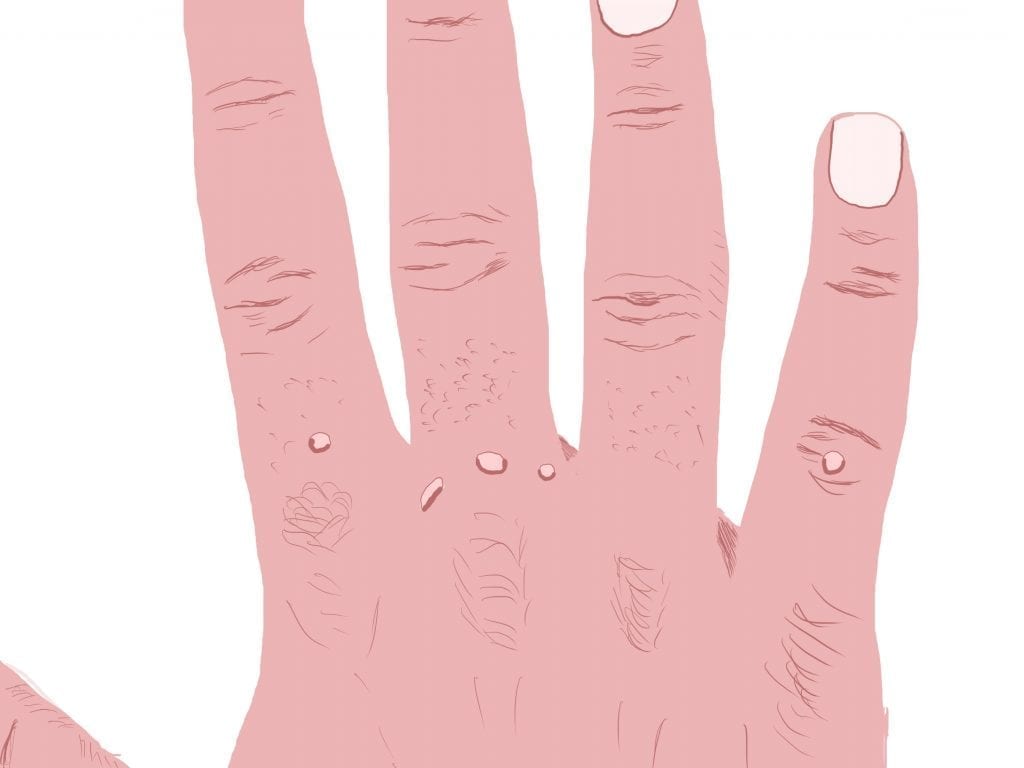
Physiology of the condition
Plantar warts are a benign growth caused by a human papillomavirus (HPV) in the upper layer of the skin. As there are different types of HPV, plantar warts are specifically caused by certain types. The warts found on the palms and soles are different from those caused by genital HPV types. Some people mistakenly believe that plantar or palmar warts are malignant. They are harmless, most often disappear after about two years, and do not require treatment. The types of warts can differ depending on their location.
Infection with plantar warts
The virus most often attacks the outer part of the skin. HPV thrives in warm, damp places such as swimming pool changing rooms, showers and areas around pools. Contact with an infected surface or person can allow the virus to enter through small cuts in the skin.
The initially affected area may be swollen, reddened and slightly painful when pressed. Later, a characteristic wart develops: a small greyish bump with a flat top, which often has a dip in the centre of its surface.
You can learn more about the human papillomavirus: /human-papillomavirus-hpv-causes-symptoms-and-treatment/
You can learn more about the different types of infections: Infections: Types, Causes and Helpful Tips
Causes and risk factors for developing plantar warts
Plantar and palmar warts are caused by HPV infection, and the infection can spread from person to person both through direct contact and indirectly through contact with contaminated surfaces. Although plantar warts are contagious, the risk of infection is relatively low.
The likelihood of catching the virus increases when the skin is damaged or moist. The viral particles can then enter tiny cracks in the skin and remain there for a longer period. A weakened immune system is also a risk factor for developing plantar warts.
Support your immune system with ZinSeD, a special immune complex with zinc, selenium, vitamin D3 and vitamin C. Learn more: /products/zinsed/
You may also support your immune system with Ceget +, a combination of echinacea extracts and acerola with vitamin C and zinc.
Symptoms of plantar warts
As plantar and palmar warts are small, with a thickness similar to that of a pencil lead, they often go unnoticed. Sometimes plantar warts can grow in groups, and these are called mosaic warts.
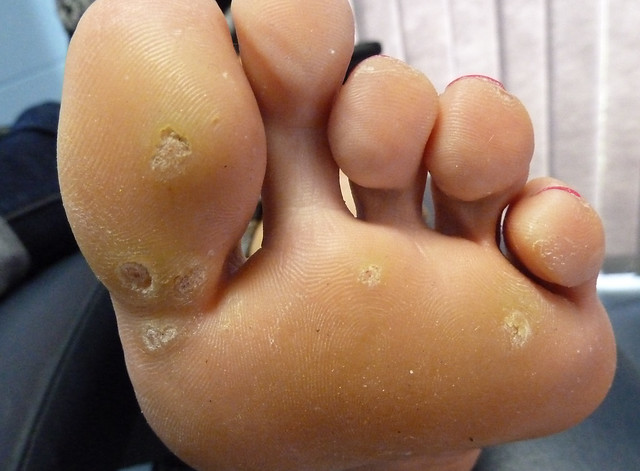
In some cases, small black dots appear, which represent clotted blood vessels that have grown into them. Some warts may cause discomfort when walking.
Plantar warts usually do not stand out above the skin as much as palmar warts, because of the pressure from walking.
A person may be affected by the external appearance of plantar warts, especially if they appear on the hands or face. But apart from the appearance, plantar warts have no symptoms. They may be unpleasant or painful if located on or near the nails or heels. Sometimes they may bleed or crack. Plantar warts often disappear on their own, but in the case of pain or leaving scars, a consultation with a dermatologist, pharmacist or other specialist is recommended.
When is a consultation with a specialist recommended?
In most cases, a consultation with a specialist for plantar warts is not necessary. Palmar and plantar warts often go away on their own without treatment. In around 50% of cases, plantar warts disappear within a year, and about two thirds disappear within two years. In adults this process can take longer, and in the most severe cases warts can persist for five to ten years.
Doing nothing is often the most sensible option, especially with children, as some treatments take a long time, may be painful and can cause side effects.
There are cases where a consultation is advisable. For example, when a new skin growth appears that is difficult to identify, especially if it grows quickly. Most specialists can determine whether it is a wart simply by visual examination. A consultation with a specialist is also advisable when a wart causes pain or another type of discomfort, or when it bleeds.
In the following situations, a consultation with a dermatologist is advisable: when a wart appears on the face; when further tests are needed; when the wart spreads widely; when plantar warts persist after treatment with salicylic acid or cryotherapy; and when the immune system is weakened due to a medical condition.
Treatment of plantar warts
Usually plantar warts disappear on their own, but if they cause pain or discomfort, there are various treatment methods. Most treatments take several weeks, and the most important thing is consistency.
Medicines
There are many creams, gels and medicinal plasters that are sold without a prescription for treating plantar warts. Most of them contain a substance called salicylic acid. This is a chemical that helps to soften the hard upper part of the wart. Some studies show, however, that salicylic acid has little effect in treating plantar warts.
Salicylic acid should not be used on the face or on large areas of the body, as it can lead to irritation and the appearance of blisters. A consultation with a specialist is recommended if you have diabetes or another disease that predisposes you to infections or impairs nerves.
You can learn more about diabetes.
Always follow the instructions on medicinal products for plantar warts, and consult a specialist when needed. When applying a medicine, take care to protect the surrounding skin, to avoid irritation and damage to healthy skin. Be careful when applying medicine over broken skin or a scab.
Before applying a medicine, it is advisable to soak the plantar wart in water and dry it with a towel or pumice. Once the affected area has softened and the medicine is applied, a plaster may be placed over it.
This treatment should be applied every day for about three months to achieve a positive effect.
Cryotherapy
Cryotherapy is a process of freezing with liquid nitrogen. The treatment is carried out by a specialist, who freezes the wart with liquid nitrogen, and it then falls off by itself afterwards.
Some pharmacies sell preparations that contain liquid nitrogen, but these are not always effective on their own, as they contain other components and do not reach the same temperature.
When a specialist performs the procedure, they spray the liquid nitrogen using a spray or a swab. The freezing lasts between five and thirty seconds, and the time varies depending on the technique used, the size and the location of the wart.
Most often the treatment has to be repeated 6 times, with the interval between procedures being two to three weeks. Sometimes the therapy leads to blistering and may cause pain, so the procedure may be painful and is not recommended for children.
Specialised treatments
A specialist may recommend other procedures for removing plantar warts, such as surgical removal with a tool called a curette, or laser therapy. Laser therapy destroys the plantar wart and the blood vessels that feed it. These procedures are carried out under local anaesthesia, but they may be painful and leave scars. In about 30% of cases, plantar warts reappear after removal with one of these procedures. To avoid recurrence, a specialist may prescribe additional treatment, which may include an oral medicine and/or antiviral medicines.
Home remedies
Some studies suggest that home remedies for plantar warts may also be effective. According to research, garlic is effective for plantar warts. This treatment involves applying a fresh garlic clove to the wart, secured with tape or a plaster. Alternatively, tea tree oil may be used, although this may cause irritation, especially in children.
Bilka Zmiysko mlyako (dandelion milk) contains in its stem and roots a bitter juice, a milk-like sap, which due to its strong antiviral properties is traditionally used to eliminate plantar warts. The juice is squeezed from the fresh dandelion and its bitterness is applied directly onto the wart. Gradually it darkens, dries out and falls off. Treatment usually lasts about 1-3 months, depending on the size and the location. The problem with this method is that it cannot be applied through the summer and winter, when the dandelion does not bloom.
Plantar warts would be affected remarkably by a detoxifying programme that includes a healthier diet, exercise, drinking more water and herbs that support the activity of the immune system, as well as the skin and other detoxifying organs and systems in the organism.
The product DetoxiFive contains herbal extracts and zinc, which support the body's natural cleansing processes. Learn more about DetoxiFive!
ViruFor is a special formula that supports the body's natural antiviral defence. It contains high-quality extracts of black cumin, Lonicera japonica, andrographis and ginger. All ingredients are traditionally used to support the body's response to viruses. You can learn more about ViruFor!
Useful tips for preventing plantar warts
The following useful tips may help to reduce the risk of plantar warts developing, and to reduce the risk of infecting other people if you already have the condition:
- use individual towels, shoes and socks;
- wear flip-flops in public showers and swimming pools;
- cover plantar warts with a waterproof plaster when swimming;
- avoid picking at and tearing plantar warts;
- avoid picking and biting your nails.
Conclusion
Plantar warts are a viral infection with the human papillomavirus in the upper layer of the skin. The warts that cause plantar warts can spread from person to person, as well as from a contaminated surface, such as public swimming pools and showers.
Infection is most common in children or young people, as not everyone exposed to the infection develops plantar warts. Most people who suffer from plantar warts have pressure or moist skin, a weakened immune system or another predisposing factor.
When the virus enters the skin, the first affected area becomes swollen and painful, and then the characteristic plantar wart develops, which is a small bump with a flat top. When the wart appears on the hand it is a palmar wart, and when it appears on the sole it is a plantar wart. The two types of warts can be visually distinguished.
Plantar warts are harmless and most often disappear by themselves, as long as a consultation with a specialist is not needed. A consultation is still needed if you cannot confirm the type of growth, when the warts spread, or when the plantar wart causes significant pain and discomfort.
There are creams, gels and plasters that are sold without a prescription. Most products contain salicylic acid, and treatment with them requires persistence and can take three months to show results. There are also alternative methods of treatment such as dissolving the wart with vinegar, or applying a dandelion or a fresh garlic clove on the affected area.
There are treatments carried out by a specialist such as cryotherapy and laser therapy. These types of treatment may be painful and leave scars.
The prevention of plantar warts includes good hygienic habits, especially in public baths and showers, and the use of individual items such as towels, socks, slippers, shoes and footwear.
Share the article:
Latest articles

Memory
There are many types of memory, from short-term and sensory memory to associative forms. Here is how we learn, store and recall information.
Amylase
Amylase is an enzyme secreted by the pancreas and the salivary glands. It begins breaking down starch in the mouth, turning complex carbohydrates…
Comments