Prostate Health: What Every Man Should Know About Symptoms, Causes and Natural Support
· 26 min read

What is overall health, and what role does the prostate play in it for men?
"Health is a state of complete physical, mental and social well-being, and not merely the absence of disease."
World Health Organization (WHO), 1948
The masculine principle is action, creating and achieving. This does not usually leave room for showing weakness. That is why, even when men notice a health problem, they may avoid thinking about it and putting off seeking help. According to the WHO, 80% of men will have prostate problems at some point in their lives and will need treatment. Prevention, a healthy lifestyle and a timely attitude towards your own health can spare you many complications and unpleasant experiences.
The prostate
The term "prostate" was first used in Ancient Greece by Hippocrates and Herophilus. It comes from the Greek "prostates", meaning "one who stands before" or "guardian". The origin of the word matches the actual function of the gland. It is essential for the fertility of the male sex and is important for a man's full mental and physical health.
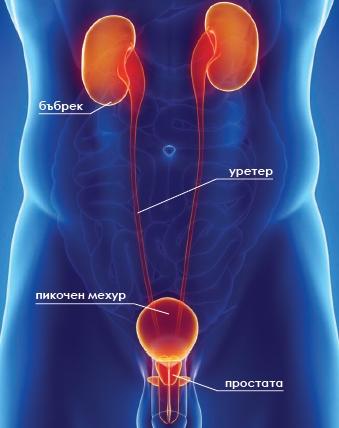
The prostate gland sits just below the bladder and surrounds the upper part of the urethra, in front of the rectum. It is about the size of a chestnut and weighs around 20-40 g. It contains muscle and fibrous cells that help it contract.
Its main function is to produce prostatic secretion, an important component of seminal fluid that helps sperm move and reach the fallopian tubes and the egg. The nutrients released by the prostate are beneficial for the quality of male sex cells. The gland secretes enzymes that give the seminal fluid the viscosity that best supports the movement and life of the sperm.
The prostate changes and develops throughout a man's life. In children it is a small structure dominated by muscular tissue. After puberty it grows, and in old age the gland undergoes reverse development. Like any other organ, it is prone to various diseases – some linked to ageing, others depending mainly on lifestyle.
Benign prostatic hyperplasia (BPH) or prostate adenoma
The prostate consists of two types of glands – periurethral and peripheral. Prostatic hyperplasia (prostate adenoma) is a benign increase in the number of periurethral glands, which press on the urethra. This is why the symptoms are linked mainly to urinary problems. Prostate adenoma is one of the most common benign conditions in men and has a strong impact on patients' quality of life. The condition calls for early diagnosis and appropriate treatment.
Statistics
- About 25% of men over the age of 40 are affected by the condition;
- 50% of men over 50 are too;
- Up to 80% of men over 60, and over 90% of men over 80;
- Only 5.6% of men aged 40-70 consult a urologist, andrologist or herbal practitioner about their urinary problems.
Symptoms
The signs are more pronounced the greater the enlargement of the gland and the resulting narrowing of the urethra. Some men have a wider urethra, so they have no complaints. In others, even the slightest enlargement of the prostate leads to difficulty urinating. The symptoms include:
- Frequent urination at night;
- Frequent urination during the day;
- Difficulty starting to urinate;
- A reduction in the volume and force of the urinary stream.
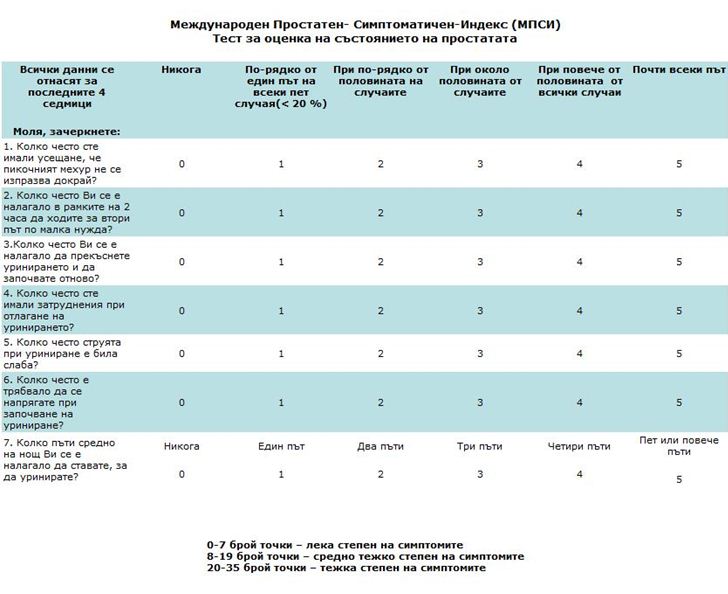
To establish the symptoms of the condition precisely, the International Prostate Symptom Score (IPSS) was created. It is completed by the patient and gives a numerical assessment of the symptoms caused by benign prostatic hyperplasia (BPH). It also makes it possible to assess the results of treatment.
Causes of BPH
The causes of the onset and development of BPH are still not fully understood. The aetiology and pathogenesis of the condition are thought to be complex and to depend on many factors, such as hormones, age, growth factors, lifestyle, diet and the environment.
- Cell growth is stimulated by the conversion of testosterone into DHT (dihydrotestosterone – a much more active derivative of testosterone), under the influence of the enzyme 5-α-reductase.
- Another cause is the conversion of testosterone into oestrogen under the influence of the enzyme aromatase, which also affects the growth of the prostate's epithelial cells.
- The assumed link between BPH and inflammatory conditions, stones in the prostate gland, sclerotic changes in the area of the bladder neck and blood vessels has not yet been confirmed.
Factors that predispose to prostate enlargement
After the age of 40, men go through natural hormonal changes similar to the menopause in women. These are known as the "andropause". Its manifestations are linked to progressively falling levels of free testosterone, while levels of oestrogens (female sex hormones) stay the same or rise relatively.
Raised oestrogen levels are an increasingly common occurrence. The reason lies in the presence of so-called xenoestrogens (false oestrogens). The most common sources are various petrochemical derivatives: pesticides, plasticisers and emulsifiers (found in almost all cosmetic products), and meat from animals treated with oestrogen preparations. All xenohormones are toxic, and most of them have an oestrogenic effect on both the male and female body.
Oestrogen is broken down in the liver, so any problems with it (inflammatory processes, hepatitis, cirrhosis) would additionally contribute to raised oestrogen levels, and hence to the potential risk of BPH.
You can learn more about the liver here: /the-liver/
Complications
- Acute urinary retention – a sudden, painful inability to urinate. An urgent consultation with a urologist is needed. A catheter may have to be fitted.
- Some men with an enlarged prostate have persistent, frequent infections of the urinary tract.
- Bladder stones – these can cause infection, blood in the urine, difficulty urinating and more. They arise because the bladder cannot empty completely.
- Bladder damage – its muscular wall becomes stretched and weakened and no longer contracts properly. This happens when the bladder has not been fully emptied for a long period. The amount of this residual urine keeps growing and begins to press the ureters towards the kidneys. Such a process can lead to kidney failure.
- Kidney damage – high pressure in the bladder due to urine retention can directly damage the kidneys or allow infections from the bladder to reach them. When an enlarged prostate blocks the flow of urine from the kidneys, it can lead to a condition called hydronephrosis – dilation of the structures that collect urine in one or both kidneys.
How prostate enlargement is diagnosed
- Your doctor will ask you to complete the IPSS questionnaire (International Prostate Symptom Score) to establish the initial condition.
- Ultrasound of a full bladder. This checks the normal size of the prostate gland, which is approximately 2x3x4 cm.
- Digital rectal examination – this allows the specialist to feel the prostate by inserting a finger into the rectum. It shows the size, shape, consistency and relationship of the gland to the neighbouring tissues and organs.
- Urine test – can help rule out infection or other conditions that cause similar symptoms.
- Blood test for prostate-specific antigen (PSA). It is normal for the prostate gland to produce PSA, which helps liquefy semen. When the prostate is enlarged, PSA levels are raised.
- Urinary flow study (urinating into a container attached to a special machine) – measures the force and volume of the urinary stream.
- Uroflowmetry – a test that examines the amount, speed and time over which urine is passed. It measures how fully the bladder can empty. It is most often done with the help of ultrasound.
- Transrectal ultrasound. The ultrasound examination measures the volume of the prostate and shows the anatomy of the gland in detail.
Managing prostate enlargement
The progression of BPH significantly affects men's quality of life, but it is rarely a life-threatening condition.
Mild enlargement
With a mild enlargement of the prostate gland and no acute symptoms, a diet is recommended, which often leads to improvement:
- Reduce your consumption of fatty meats, dairy products and refined carbohydrates.
- Choose foods rich in zinc (pumpkin seeds, root vegetables, wholegrain foods). A shortage of zinc is linked to prostate enlargement. It has been found that the prostate normally contains several times more zinc than any other organ in the human body. Studies show that zinc blocks the conversion of testosterone into dihydrotestosterone. You can get the daily amount of zinc you need through ZinSeD. Learn more: /products/zinsed/
- Selenium improves intracellular metabolism and microcirculation, which supplies the prostate with the nutrients it needs, and it contributes to normal cell division. It has an antioxidant and immune-supporting effect. It is found in the greatest amounts in Brazil nuts. You can get organic selenium combined with willowherb extract and pumpkin seed through ProstaRen. Learn more: /products/prostaren/
- Regularly eat lentils, beans and peas. They are high in glutamic acid – an amino acid that is involved in the growth of prostate cells.
- Avoid caffeinated drinks, smoking, alcohol and spicy foods.
Moderate symptoms
For moderate symptoms, conventional medicine prescribes medicines that ease the spasms and the frequency of urination. There are two kinds of medicine prescribed for prostatic hyperplasia:
- Alpha-blockers relax the smooth muscle of the blood vessels, the prostate gland and the neck of the bladder. These medicines do not work well in all men. Some of the side effects include dizziness, tiredness and a stuffy nose.
- Inhibitors block the action of the enzyme 5-alpha-reductase, which converts the hormone testosterone into dihydrotestosterone, as a result of which an enlarged gland may shrink by 20% and the symptoms ease. These medicines also do not help all patients. Side effects include: reduced sex drive, difficulty achieving an erection, ejaculation problems and more.
Severe forms
Treatment of severe forms in conventional medicine is surgical. It can be carried out in several ways, chosen according to the size of the enlargement and any complications of the condition (the size of the prostate gland itself, stones in the bladder and the patient's general state of health).
Herbal approaches
- Pygeum (Pygeum Africanum) is traditionally used to support prostate health. It inhibits the growth of the prostate's epithelial cells and has a diuretic and immune-supporting effect.
- Willowherbs (Epilobium parviflorum, Epilobium angustifolium) have a strong influence on the prostate gland. Epilobium parviflorum inhibits its growth. On the one hand, the active substances in the herb inhibit the enzyme aromatase, which converts testosterone into oestrogen, and on the other they inhibit the enzyme 5-α-reductase, which converts testosterone into dihydrotestosterone. In addition, it counteracts the growth of the epithelial cells themselves. The plant has diuretic and anti-inflammatory properties. It has a good effect on the whole excretory system. You can get a high-quality willowherb extract combined with pumpkin seed extract and organic selenium through ProstaRen. Learn more: /products/prostaren/
- Saw palmetto (Serenoa repens) is used for an enlarged and inflamed gland, painful ejaculation and urination. It leads to reduced hormonal sensitivity.
- Nettle root acts at the hormonal level and has a diuretic and anti-inflammatory effect.
- Peter Dimkov recommends a combination of roots of restharrow, goldenrod, hazel roots and parsley.
- Hazel leaves have an antibacterial action and cleanse the body. They have a diuretic effect and improve blood circulation.
- Fennel soothes the tissue of the prostate itself and balances the hormones.
- Pumpkin seeds are a source of zinc, as well as of useful amino acids – glycine, alanine and glutamic acid.
- The Brazil nut is rich in selenium – beneficial for the function of the prostate. You can get selenium through ProstaRen as well. Learn more: /products/prostaren/
- Flaxseed supplies the body with omega-3 fatty acids, which have a positive influence on hormonal balance.
Tips and recommendations to ease the symptoms of an enlarged prostate
- Avoid physical strain, especially with a full bladder. Gentle exercise is good for the prostate because it gets the blood moving in the lower back and pelvic area. Avoid long periods of sitting still.
- Do not put off going to the toilet.
- Keep your bowels moving regularly. Constipation can make unpleasant symptoms worse. Find out more about constipation and how to deal with it: /constipation-causes-symptoms-treatment/
- Cut down on saturated animal fats.
- Stop smoking and avoid alcohol. Alcohol can lead to a zinc deficiency in the body.
- Include pulses, nuts and seeds in your diet.
- Drink more water.
- A vegetarian diet reduces your intake of the artificial hormones used to feed livestock, which may lower the risk of an enlarged prostate.
- According to recent studies, antioxidants may play a role in how prostate tissue grows. Enrich your menu with enough selenium, zinc and vitamins C, A and E. Eat more fruit and vegetables. ZinSeD contains a combination of zinc, selenium and vitamins C and D. Learn more: /products/zinsed/
- Get rid of excess weight. Surplus fatty tissue can upset the body's hormonal balance.
- The fibre found in vegetables, fruit and wholegrain foods stays undissolved in the digestive tract and so takes up the excess hormones released in the bile. This way they are passed out more easily through the bowel and are not reabsorbed, which would disturb the hormonal balance.
- Take a contrast shower to help improve blood circulation.
Prostatitis
The prostate gland is full of many ducts, which can easily become infected, inflamed or blocked by thickened secretions or tiny stones. Prostatitis is an inflammation of the gland. It can be: acute bacterial, chronic bacterial, non-bacterial, or chronic pelvic pain syndrome.
It can be:
- Acute bacterial;
- Chronic bacterial;
- Non-bacterial;
- Chronic pelvic pain syndrome.
Statistics
- Prostatitis occurs at every age in sexually active men and is increasingly found in very young men.
- It is the most common urological diagnosis in men under 50.
- It is the third most common diagnosis in men over 50.
Symptoms typical of the different types of prostatitis:
- burning when urinating;
- frequent urges to urinate;
- pain in the back, especially the lower back;
- difficulty with erection and/or ejaculation;
- blood and/or pus in the urine;
- strong-smelling urine;
- chills;
- high temperature;
- pain during bowel movements;
- pain in the lower abdomen, around the thighs or the genitals;
- stabbing pain between the scrotum and the anus;
- watery discharge from the penis;
- painful and/or premature ejaculation and blood in the semen.
ACUTE BACTERIAL PROSTATITIS
This is a bacterial infection, most often caused by: E. coli, Proteus mirabilis, Klebsiella, Enterococcus faecalis, S. epidermidis, S. aureus, Serratia, P. aeruginosa, Enterobacter and Providencia. Sometimes the causes are the microorganisms behind sexually transmitted infections (gonorrhoea, chlamydia). One of the fungal causes is Candida spp. Among parasites, the most common cause is Trichomonas vaginalis.
There are several ways in which bacteria can reach the prostate gland:
- Along the ducts (the most common route) – in an infection of the urethra (urethritis), by contiguity, after the back of the urethra has been colonised, the causative agents reach the prostate.
- By contiguity from other organs – the prostate can be infected with bacteria from the rectum, either through direct invasion across its wall or by the lymphatic route. Bacteria can also travel up from the kidneys or the urinary bladder.
- Haematogenous (blood) route – after an infectious or purulent disease of another organ, the causative agents reach the prostate through the bloodstream.
CHRONIC BACTERIAL PROSTATITIS
Medical statistics show that 20% of men under 40 and three in every five men of more advanced age have chronic bacterial prostatitis, which can develop without any outward symptoms. It is the consequence of incorrectly treated or late-treated urethritis or acute prostatitis.
NON-BACTERIAL PROSTATITIS
It appears most often between the ages of 30 and 50. It shows itself as an inflammation in which the prostate gland releases white blood cells (pus cells), but no bacteria. The generally accepted explanation is that this condition is caused by abnormal reflux of urine into the bladder, whereby urine flows back into the ducts of the prostate and causes chemical irritation and inflammation. It can arise or get worse if a man trains for running or another active sport with a full bladder.
There is another theory, according to which some men produce a thicker and perhaps more acidic prostatic secretion that cannot pass normally through the narrow ducts, and as a result of its build-up, swelling and inflammation occur.
CHRONIC PELVIC PAIN SYNDROME
A condition in which the typical symptoms of prostatitis are present, but there are no signs of infection or inflammation. Sometimes the symptoms are triggered by the pelvic muscles or by disorders of the urinary tract.
Factors that predispose to prostatitis
- Sex without protection (including anorectal intercourse) is one of the main reasons for the spread of the disease among young, sexually active men.
- The higher incidence of this condition is linked to the lifestyle many men lead – a long time spent behind the wheel, in a position that is unnatural for the body; lack of movement; an unhealthy diet.
- Predisposing factors include narrowings and anomalies of the urethra, injuries to the prostate, and especially those caused by post-operative infection.
- Very frequent use of a catheter is linked to the presence of bacteria in the urinary bladder, which can easily travel up into the prostate as well.
Complications of untreated prostatitis
The seriousness of the condition is determined by its consequences, which cause significant psychological and social problems for men. In many cases, after inflammatory diseases of the prostate that have not been properly dealt with, infertility and erectile dysfunction (impotence) can result. Other complications may include:
- Prostatitis becoming chronic, which makes treatment considerably harder;
- The infection spreading by contiguity to other organs – the urethra, urinary bladder, kidneys;
- Inflammation of the epididymis – the coiled tube on the back of the testicle (the epididymitis);
- A prostate abscess (a cavity filled with pus inside the prostate).
How prostatitis is diagnosed
- The most important test for diagnosing bacterial prostatitis is a quantitative microbiological examination of urine, ejaculate and prostatic secretion, as well as their examination under the microscope. The laboratory results show characteristic changes; a raised white blood cell count and an elevated ESR are typical of an acute infection. White blood cells and a positive bacterial culture in the prostatic secretion are typical. The presence of 5–10 white blood cells per field under 450x magnification points to infection.
- Diagnosing "inflammation of the prostate" and determining the type of prostatitis requires a specific algorithm. In acute disease, a history must be taken from both the patient and his partner, because sexually transmitted forms of infection may be present.
- Ultrasound of the prostate.
- The prostatic secretion is of central importance for the diagnosis. It is obtained after a massage of the gland.
Treatment of prostatitis
Very often, treating prostatitis is difficult. On the one hand, the exact causative agent cannot always be isolated and identified, and on the other, another infection elsewhere in the body may be the original source. Often such an infection is not looked for or diagnosed at all. Most commonly, conventional medicine prescribes antibiotics. A particular difficulty is that not all medicines penetrate the prostate well, because of the blood–prostate barrier, which hinders the entry of some substances and medicinal products. This barrier, like others in the body, is in fact a mechanism that reduces the toxic load on the organ, which would be unlikely to cope with aggressive antibiotic preparations. This also explains the well-known difficulty of finding suitable treatment for prostatitis. Fortunately, herbs do not meet the same obstacles.
Herbal support
- The properties of willowherb (Epilobium parviflorum and Epilobium angustifolium) are well known in traditional use for prostate discomfort of all kinds. It is known for its strong soothing properties and is traditionally valued for supporting prostate comfort. Early studies suggest that willowherb has antibacterial activity, especially against Escherichia coli – one of the bacteria that cause prostatitis. Narrow-leaved willowherb (Epilobium angustifolium) is known to contain certain highly active substances that help limit inflammation. The plant also has a calming effect on the irritated urinary tract. It acts as a strong diuretic, helping to cleanse the urinary tract and supporting the quick flushing of bacteria out of the prostate. You can get a high-quality willowherb extract combined with pumpkin seed extract and organic selenium in ProstaRen. You can learn more here: /products/prostaren/
- Other diuretic herbs also have a good effect, such as horsetail, birch leaf, juniper, parsley and bearberry.
- Red pine and birch have an antiseptic action on the urinary tract.
- Echinacea has antiviral and antibacterial properties and supports the body's natural defences.
- Turmeric and curcumin are anti-inflammatory agents.
- The combination of goldenrod and American cranberry has a particularly beneficial effect: it helps flush out bacteria, supports a normal inflammatory response, acts as a diuretic and supports the immune system. You can find a combination of high-quality extracts of American cranberry and goldenrod in CystiRen. Learn more: /products/cystiren/
- Cranberry juice has antibacterial properties that help support the urinary tract and a normal inflammatory response. However, keep in mind that cranberries are rich in sugar, which could feed some of the bacteria. That is why it is better to take a pumpkin seed extract. It supports blood circulation, which in turn helps the body defend itself against infections.
- Dandelion has a diuretic effect and a generally strengthening action on the prostate gland.
Tips and recommendations to ease the symptoms of prostatitis
- Limit your consumption of alcohol, spicy food and coffee. Eliminate chlorinated and fluoridated water from your diet, as well as refined foods.
- Increase your fluid intake. Drink 3–4 litres of water a day to further stimulate the production of urine. This helps flush out bacteria and is a good way to help look after the bladder and kidneys, as well as to stay hydrated.
- During treatment, it is recommended that you abstain from sexual contact.
- Sitting for a long time in an awkward position creates conditions for infection. Constantly sitting at your workplace, in front of the television at home, at the computer, behind the wheel and so on leads to blood pooling in the pelvis and creates conditions for prostate problems.
- Eat foods rich in selenium, such as wholemeal bread and garlic. 1–2 Brazil nuts a day are enough to maintain the optimal daily dose. Selenium contributes to the formation of semen, supports blood circulation and microcirculation, which helps the active substances reach the prostate more effectively. It also contributes to the normal function of the immune system and the formation of T-lymphocytes, which play a part in the body's defences. You can also get selenium through ProstaRen. Learn more: /products/prostaren/
- Modern studies show that vitamin C has a particular effect on spermatogenesis, and it contributes to the protection of cells from oxidative stress. Eat more red peppers, broccoli, blackcurrants, strawberries, oranges and kiwi fruit.
- Eat 30–60 g of raw pumpkin seeds a day. They are rich in zinc. Zinc is essential for maintaining a healthy prostate and for supporting normal sexual function in men.
Prostate cancer
When we talk about diseases of the prostate, prostate cancer inevitably comes up.
Prostate cancer is a carcinoma that develops from glandular cells which, for reasons that are still not well understood, undergo varying degrees of cancerous change. It is thought that the development of prostate cancer is influenced by male sex hormones, but the exact triggering mechanism is not sufficiently clear. Some researchers suggest that the predisposition is inherited. Prevention is very important in families with a genetic risk.
Long-term studies show that in a large proportion of men between 50 and 80 the disease is present without any outwardly visible symptoms. In its early stages they are completely absent! The reason is that 90% of tumours develop on the outer side of the prostate and do not obstruct urination. They grow slowly, and four to five years may pass before they double in size. That is why the regularity of the preventive check-ups that every man needs to have after the age of 50 is of exceptional importance. In the later stages, the symptoms may be similar to those of prostate hyperplasia.
Prevention
Phytoestrogens
Phytoestrogens - rice and soy products, fish, pulses, wholegrains and flowering plants (relatives of clover and red clover) – all of these foods are rich in weak plant hormones (isoflavonoids, phytoestrogens) that are released during digestion. It is thought that, by interacting with the body's natural male hormones, they play a protective role. Unlike the oestrogen found in processed foods and the surrounding environment, which comes from synthetic sources, plant oestrogen is so close to natural human oestrogen that it can stimulate the production of a protein that absorbs (and neutralises) artificial oestrogens as well as the body's own male hormones. In this way the prostate is less exposed to hormonal influence and, accordingly, to the risk of disease.
Antioxidants
Antioxidants play their part in protecting the body from harmful environmental influences. By absorbing the harmful free radicals that form in the body during normal metabolic processes, they reduce the risk of coronary heart disease and cancer. Enrich your daily intake with antioxidants that are good for the prostate – vitamin C, vitamin E, selenium and others. They are usually found in fruit and vegetables.
Eat plenty of broccoli, cabbage and cauliflower. They are rich in a specific type of antioxidant called “isothiocyanates”, known for their anticarcinogenic action.
Selenium is a very powerful antioxidant. It also helps the body eliminate toxins and heavy metals. It has an immune-supporting action, as it improves the activity of the white blood cells, the macrophages, which further boosts the body's own defences. The mineral selenium stimulates the production of glutathione peroxidase, an antioxidant that has been widely studied in relation to prostate health. Selenium may slow tumour growth by suppressing the development of blood vessels in cancer cells. It is found in the greatest amounts in Brazil nuts, and in smaller amounts in wheat, garlic, mushrooms and others: /products/prostaren/
Eat more tomatoes, watermelon and guava. They are rich in lycopene, which has a role in the prevention of prostate cancer.
According to recent studies, grape seed is of great importance for the prevention of prostate cancer. The proanthocyanidins it contains are among the strongest antioxidants. In addition, grape seed extract causes apoptotic cell death in prostate cancer cells (apoptosis is the physiological process of cellular self-destruction).
You can find a grape seed extract with a high proanthocyanidin content (95%) in ProstaRen: /products/prostaren/
Studies show that oenothein B – one of the active substances in Willowherb – has a known inhibitory effect on the growth of prostate cancer cells.
General tips for a healthy prostate
Limit your contact with pesticides and other pollutants.
Drink enough water. The amount your body needs is worked out by multiplying your weight (in kg) by 0.03, so if you weigh 70 kg, you should drink 70 x 0.03 = 2.1 litres a day. Increase your intake in hot weather, during strenuous physical work, stress, diarrhoea and other factors that cause increased fluid loss.
It is important to maintain good personal hygiene and to avoid sexual contact without protection.
Do not wear tight underwear. Pressure creates conditions for congestion and infections.
Movement improves blood circulation. But do not ride a bicycle – it only puts extra strain on the prostate. Walking is beneficial for this kind of problem. The prostate needs special exercise. The figure-of-eight-shaped muscle, which surrounds the anus and the penis, should be “trained”. Every hour, for 10 minutes, it is good to contract this muscle rhythmically, but very slowly. Count 1-2-3-4-5 to tense it, and 6-7-8-9-10 to release it. It can be done in any position of the body.
Try to empty your bladder often. Urine retention can be a precondition for the appearance of bacteria and infections.
Try to keep your digestion “regular”. Digestive disorders can be a prerequisite for infection and enlargement of the prostate.
Make sure your table always has foods rich in selenium, zinc and vitamin C. If this is difficult for you, you can top them up in easily absorbed forms with ZinSeD: /products/zinsed/
Cut down on spicy seasonings, and avoid very hot, sour and salty foods.
Protect yourself from damp and cold.
Have regular preventive check-ups.
ProstaRen
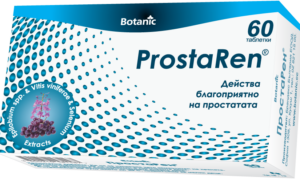
ProstaRen is a specially developed synergistic formula of high-quality extracts of Narrow-leaved and Small-flowered Willowherb, Grape Seed and organic Selenium in its most bioavailable form, L-selenomethionine. They work together to support the prostate and the comfort of the urinary tract. Willowherb is traditionally used to support the normal function of the prostate gland at its different stages, and grape seed is a source of antioxidants that help protect cells from oxidative stress.
ProstaRen (ProstaRen) can be taken as a supplement to a healthy lifestyle and alongside the care recommended by your doctor. It is a natural option for those who want to support their prostate health. Learn more: /products/prostaren/
Interesting facts about the prostate
Nicotine damages the kidneys, the bladder and the prostate eight times more than it does the lungs. You can learn more about the kidneys: /kidneys/
In her book “Health from the Lord's Pharmacy”, Maria Treben calls Willowherb “the magic herb for the prostate.”
Prostatitis is extremely common among smokers, retired athletes and drivers.
The Russian tsars paid gold to obtain the medicinal Willowherb, known as “Ivan tea”.
You can get a quality willowherb extract through ProstaRen. Learn more: /products/prostaren/
Good sleep and the prostate
According to specialists from the Harvard Institute of Public Health, men who sleep well are at lower risk of developing advanced prostate cancer. The risk is higher in people with low levels of melatonin, which occurs with sleep deprivation or poor-quality sleep. High levels of the so-called sleep hormone, which is produced at night and helps the body regulate its internal clock, are linked to up to 75% lower risk of prostate cancer.
Men who have trouble falling asleep or do not sleep long enough have lower levels of this hormone, and according to the researchers, chronic sleep problems may increase the risk of the disease. This conclusion is based on a seven-year study.
Conclusion
The use of plants as medicine is undoubtedly the oldest and most widespread form of therapy in the world. The main aim of herbal remedies is to stimulate the body's natural ability to restore itself. Because of their safety, most herbal products can be taken for a long time, until improvement is felt.
If you want to support your prostate health, you can turn to ProstaRen. ProstaRen is a high-quality natural product with standardised extracts of willowherb and grape seed, and with organic selenium. Learn more: /products/prostaren/!
Zinc is also very important for the normal function of the prostate. You can top it up with ZinSeD. Learn more: /products/zinsed/
With thanks for the contribution of:
Dr Dimitar Pashkulev – phytotherapist and dietitian
Dr Gabriela Minova – urologist at the Pirogov University Multiprofile Hospital for Active Treatment and Emergency Medicine, Sofia
You can buy ProstaRen online HERE!
Share the article:
Latest articles

Memory
There are many types of memory, from short-term and sensory memory to associative forms. Here is how we learn, store and recall information.
Amylase
Amylase is an enzyme secreted by the pancreas and the salivary glands. It begins breaking down starch in the mouth, turning complex carbohydrates…
Comments