Prostatitis: Everything You Need to Know
· 9 min read

What is prostatitis?
Prostatitis is inflammation of the prostate gland. It can be triggered by a variety of causes, including infections, and it is one of the most common urological conditions in men. Prostatitis is a general term that covers several different conditions.
- Prostatitis can affect men of all ages, but it is most often diagnosed in men under 50.
- Prostatitis is the third most common diagnosis in men over 50.
Types of prostatitis
BACTERIAL PROSTATITIS
This is a bacterial infection, with the most common causes being: E. coli, Proteus mirabilis, Klebsiella, Enterococcus faecalis, S. epidermidis, S. aureus, Serratia, P. aeruginosa, Enterobacter and Providencia. Less often, the causes are microorganisms responsible for sexually transmitted diseases (gonorrhoea, chlamydia). Candida spp. is one of the less common causes. Among parasites, the most common cause is Trichomonas vaginalis.
There are several possible ways in which bacteria can enter the prostate:
- Canalicular (the most common) – with an infection of the urethra (urethritis), the infection spreads along it, and after the posterior urethra is colonised, the pathogens enter the prostate.
- By contiguity from other organs – the infection may spread from the rectum, either by direct invasion through its wall or via the lymphatic route. Bacteria may also come from the kidneys or the bladder.
- Haematogenous (through the blood) – after a distant infectious or purulent disease in another organ, the pathogens reach the prostate through the bloodstream.
Acute prostatitis requires prompt diagnosis and appropriate treatment, and it can then be resolved completely. If this principle is not followed, acute prostatitis can become chronic. Once the bacterial cause has been identified, antibiotic treatment is carried out appropriately in terms of type, duration and dose. Various physiotherapy and balneological procedures also have good effects. If complications occur (such as a prostatic abscess), the abscess is drained surgically.
CHRONIC PROSTATITIS
Chronic prostatitis is a frequently occurring condition. Medical statistics show that 20% of men under 40 and three in every five men at more advanced ages have chronic bacterial prostatitis, which can progress even without external symptoms. Treatment of prostatitis is very often delayed. One of the main reasons for the condition becoming chronic is precisely neglected acute prostatitis. Almost every incorrect or untimely treatment of a urinary infection or acute prostatitis can lead to it becoming chronic. Chronic prostatitis is considered as such when the symptoms last longer than three months.
NON-BACTERIAL PROSTATITIS
It most often appears between the ages of 30 and 50. It is manifested by pain, during which the prostate secretes white blood cells but no bacteria. The general explanation is that this suffering is caused by abnormal use of the pelvic floor muscles, during which urine flows back into the prostate ducts and causes chemical irritation and pain. It can be triggered or made worse if a man trains by running or doing active sport with a full bladder.
There is also another theory, according to which some men may produce more fluid and a more acidic prostatic secretion, which cannot be normally expelled through the narrow ducts, and as a result swelling and pain occur.
Symptoms and characteristics of the different types of prostatitis
- Pain when urinating;
- Frequent urge to urinate;
- Pain in the lower abdomen, especially in its lower part;
- Difficult erection;
- Difficult ejaculation;
- Blood and/or pus in the urine;
- Acute urinary retention;
- Fever;
- High temperature;
- Pain during bowel movements;
- Pain in the lower back, near the kidneys or in the groin;
- Pain between the scrotum and the anus;
- Strong pain during ejaculation;
- Watery discharge from the penis;
- Painful and/or premature ejaculation and blood in the semen.

Complications of neglected prostatitis
The seriousness of the condition depends on the following factors, which can cause significant psychological and social problems for men. In many cases, after severe infectious diseases of the prostate, the condition can progress to infertility and erectile dysfunction (impotence). Other complications may include:
- Chronicity of the prostatitis, which can significantly complicate treatment;
- The infection may spread to neighbouring areas and affect other organs – the urethra, bladder, kidneys and testes;
- Epididymitis – inflammation of the epididymis, located at the back of the testicle;
- Prostatic abscess (a cavity filled with pus in the prostate);
- Strong pain during ejaculation.
How is prostatitis diagnosed?
- The most important test for diagnosing bacterial prostatitis is the quantitative microbiological examination of urine, ejaculate and prostatic secretion, as well as modern microscopic examination. Laboratory results show characteristic changes: leukocytosis and an elevated ESR are typical of acute bacterial infection, and the prostatic secretion typically contains leukocytes with a positive bacterial culture. The presence of 5–10 leukocytes per field at 450x magnification indicates infection.
- Establishing the diagnosis of prostatitis and determining its type requires a defined algorithm. In acute cases it is essential to examine the patient as well as his partner, because of the possibility of sexually transmitted forms of infection.
- Ultrasound (echography) of the prostate.
- The main value for diagnosis lies in the prostatic secretion, obtained after prostate massage.
Treatment of prostatitis
Treating prostatitis is often difficult. On the one hand, the exact cause can sometimes be isolated and identified; on the other hand, there may be another infection elsewhere in the body that is the source. Such an infection is often not even sought or diagnosed. Most often, conventional medicine prescribes antibiotics. A particular difficulty is that not all medicines penetrate the prostate well, because of the blood-prostate barrier, which prevents certain substances and medications from entering. This barrier, like others in the body, is a mechanism that reduces the toxic load on the organ, and it can unfortunately be followed by aggressive antibiotic medications. This explains the known difficulty in finding a suitable treatment for prostatitis. Fortunately, herbal remedies do not usually face such obstacles.
After any antibiotic treatment, you may consider DetoxiFive to help support the body's recovery: /products/detoxifive/
Phytotherapy
Fortunately, the body recognises herbal and botanical remedies as safe and as substances natural to it, and the blood-prostate barrier lets them through without problem. Once inside, they exert their action. The reason plant-derived substances have an active effect on human physiology is that all living organisms share similar composition and chemical building blocks. It is also a fact that plant substances often reach places in the body that are difficult for other medicinal products to reach. Thanks to their safety, herbal products can be taken for a long time while improvement continues.
Bearberry
The well-known Austrian phytotherapist Maria Treben calls bearberry the men's herb. This is not accidental. The healing properties of bearberry are well known in various disorders of the prostate. It has been used for centuries in traditional Russian medicine, as well as throughout Europe. It is known for its strong antiseptic properties, which have a beneficial effect in prostatitis. Modern research shows that bearberry has anti-inflammatory and antioxidant effects. Its antibacterial activity has been tested in vitro against Escherichia coli, one of the most common causes of prostatitis. The results show strong antibacterial activity, which inhibits the growth of bacteria.
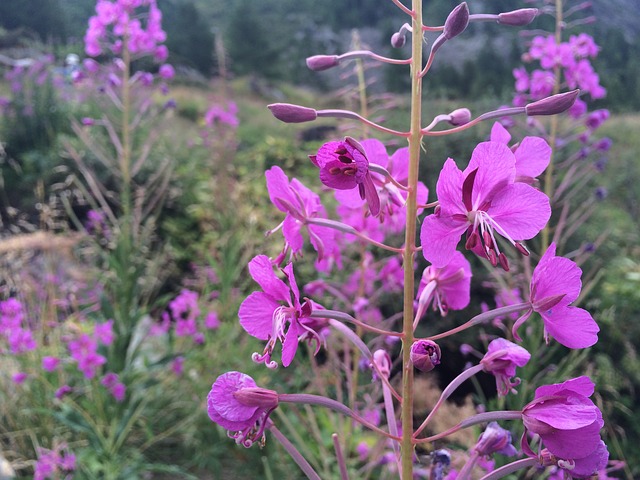
Bearberry has a direct relation not only to the prostate, but also to other urinary and bacterial infections of the prostate and urinary tract. It is particularly valued even in benign enlargement of the prostate. Did you know that bearberry contains certain highly active tannins, which help limit inflammation? The plant also has a soothing effect on the various urinary tracts. Above all, it is known for its strong diuretic action, which helps cleanse the urinary tract and supports the body in clearing bacteria from the prostate.
Cranberry
Cranberry contains antibacterial, anti-inflammatory and antioxidant properties. It is worth noting that cranberry is rich in many sugars, which can feed some bacteria. For this reason, it is better to take cranberry seed extract, which is far more concentrated. It supports the health of the urinary tract and the body's natural defences.
Other herbs
Other diuretic herbs also have a good effect, such as goldenrod, buchu, juniper, parsley and uva ursi.
Cranberry and birch have antiseptic action on the urinary tract.
Echinacea has antiviral and antibacterial properties and supports the body in fighting infection.
Nettle and corn silk are diuretic herbs.
Carminative herbs have a diuretic effect and a general strengthening action on the prostate gland.
Golden rod and red cranberry combined have a particularly strong beneficial effect: they cleanse bacteria, act antibacterially and diuretically, and support the immune system.
Grape juice has bactericidal, diuretic and anti-inflammatory properties. It is worth noting that grapes are rich in sugars, which can feed some bacteria. For this reason, it is better to take grape seed extract, which is much more concentrated and is absorbed more fully. Grape seed extract contains bacteriostatic and antioxidant properties.
ProstaRen
High-quality extracts of bearberry and grape seed are contained in the product ProstaRen. ProstaRen also contains organic selenium. Selenium is an indispensable component of the key antioxidant enzyme glutathione peroxidase, which helps protect the body from the damaging action of free radicals. It supports fertility by contributing to sperm motility. Selenium helps the body eliminate and protect itself against the toxic effects of heavy metals, especially cadmium. It takes part in the function of the immune system, supports the synthesis of phagocytes, and contributes to the body's anti-inflammatory and antibacterial activity. Selenium takes part in testosterone synthesis and supports the production of pituitary hormones. For these reasons, selenium may be theoretically linked to the function of the male endocrine glands and to the role of testosterone in prostate physiology. Selenium directly supports spermatogenesis and contributes to normal male reproductive function.
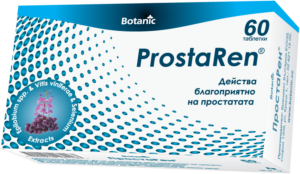
ProstaRen is a synergistic formula of high-quality 100% natural ingredients for the comprehensive care of the prostate.
Conclusion
Prostatitis is inflammation of the prostate gland. Most often it is caused by bacterial infection, and the most common causes are E. coli, Proteus mirabilis, Klebsiella, Enterococcus faecalis, S. epidermidis, S. aureus, Serratia, P. aeruginosa, Enterobacter and Providencia. Apart from this, the condition may also be caused by microorganisms responsible for sexually transmitted diseases, fungi and parasites.
The symptoms of prostatitis are many and varied. They may include not only problems with urine and urination and prostate function (erection, ejaculation and so on), but also pain in neighbouring organs and the groin area, as well as whole-body symptoms such as temperature and chills.
Diagnosing prostatitis involves a series of tests of urine, ejaculate and prostatic secretion, and the correct algorithm is extremely important.
The most common treatment is the prescription of antibiotics, but it is important to address the cause of the infection. Consistency, eliminating the cause and maintaining a healthy lifestyle throughout treatment are also essential.
As treating prostatitis with synthetic substances can be difficult, phytotherapy offers an alternative that can penetrate through the prostatic-blood barrier.
Read more
Share the article:
Latest articles

Memory
There are many types of memory, from short-term and sensory memory to associative forms. Here is how we learn, store and recall information.
Amylase
Amylase is an enzyme secreted by the pancreas and the salivary glands. It begins breaking down starch in the mouth, turning complex carbohydrates…
Comments